
Cosmetology and esthetics are both beauty careers, but they are not the same. Cosmetology is a broad program that covers hair, skin, and nails. Esthetics is a focused program that centers on skin care. This guide compares the two side by side. You will see the services, training hours, work settings, and daily tasks. Then you can use the quick tab tool and the question list to find your best fit at TSPA Delaware.
Quick takeaways
The main difference is scope.
A cosmetologist works across the beauty field. Hair is the biggest part, but skin and nails are included too. An esthetician works on skin. Facials, skin analysis, and treatments are the heart of the job.
Think of it this way. Cosmetology is a wide path with many doors. Esthetics is a deep path into one specialty.
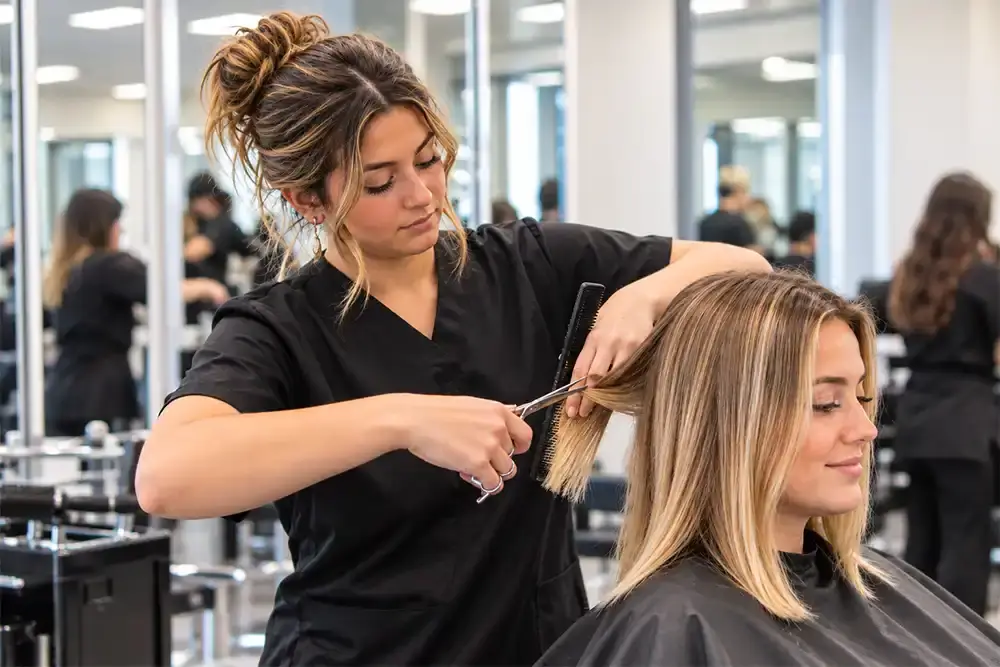
A cosmetologist helps clients look and feel their best. Most spend their days on hair.
Typical tasks include:
A cosmetologist can work in a salon, a spa, or a studio. Some work for themselves. Others build a loyal client list in a busy salon.
Want to see how the training works? Read what to expect in cosmetology school.
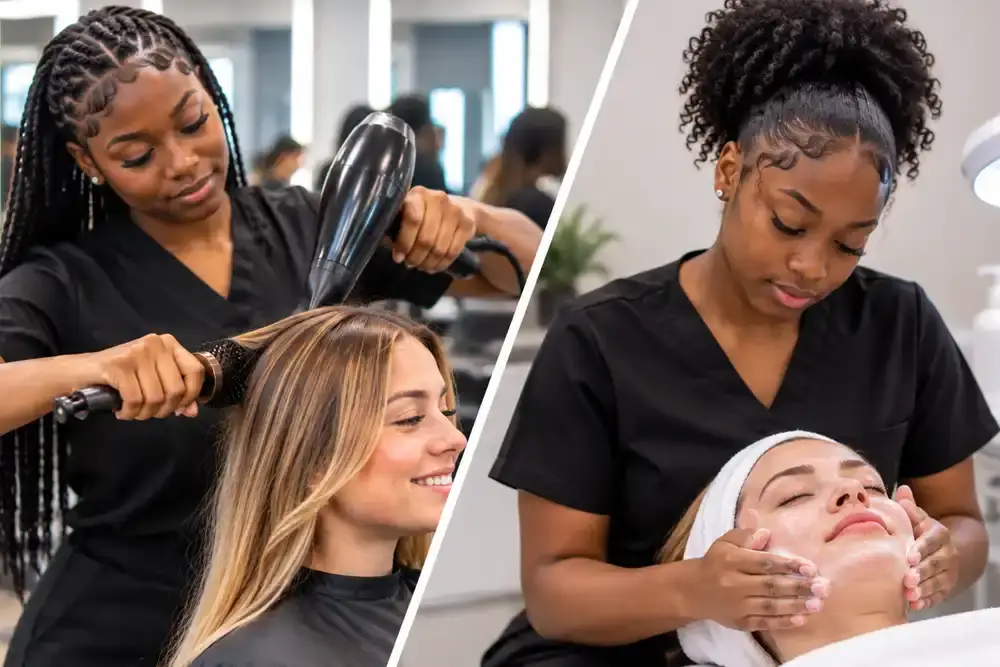
An esthetician cares for the skin. They help clients with healthy, comfortable skin.
Typical tasks include:
Estheticians work in spas, salons, skin care studios, and wellness settings. Some focus on advanced services. For a look at popular treatments, read our guide to galvanic facial treatments.
You can also see what ingredients are trending in fall skincare.
| Cosmetology | Esthetics | |
|---|---|---|
| Focus | Hair, skin, and nails | Skin care |
| Program length at TSPA | About 1,500 hours | About 600 hours |
| Average completion | Around 13 months | Around six months |
| Main services | Cuts, color, styling, plus skin and nails | Facials, skin analysis, exfoliation, waxing |
| Typical work settings | Salons, spas, studios | Spas, skin studios, salons, wellness settings |
| Pace of the day | Many hair services, often back to back | Calm, one-on-one treatment time |
| Tools | Shears, color tools, styling tools | Skin tools, machines, treatment products |
| Best for | People who want variety | People who love skin science |
Like to compare the two in a more hands-on way? Tap through the tabs below.
Tap a tab to see each career at a glance.
The morning might start with a color appointment. Then comes a haircut, a blowout, and a quick consultation with a new guest. Between services, the stylist cleans the station, checks the schedule, and talks with clients about their next visit.
The pace is lively. There is a lot of variety. Every guest brings a new idea.
See a student’s version in a day in the life of a cosmetology student.
The day starts with a calm treatment room. A client arrives, and the esthetician checks their skin and asks about goals. Then they plan the facial, choose products, and guide the client through the service.
The pace is slower and more personal. You spend time with one client at a time. Many estheticians love the relaxing feel of the work.
These two careers overlap more than you may think.
For more, read about the five most important skills in cosmetology school.
Cosmetologists often work in:
Estheticians often work in:
Med spas are a fast-growing part of the industry. Read more in our post on the med spa boom.
Delaware’s beach towns also support spa and salon work. See the busiest seasons for salons in Delaware to learn how the calendar shapes the work.
Clients care more about skin than ever. They ask about ingredients. They want routines that fit their lives. They also want a trained professional they can trust.
Winter makes this even more true. Cold air and dry heat leave skin tight and dull. Many clients book facials to reset their skin for the season.
That is one reason people are searching for esthetics training. For more, read the growing demand for estheticians.
Answer these honestly. Count which path gets more “yes” answers.
Still unsure? Take our short quizzes. Try “Is cosmetology right for me?” and “Should I be an esthetician?”.
Yes, many beauty pros build skills over time.
Some start with cosmetology and later add skin care or lash services. Others start with esthetics and add specialty courses. Short courses through Advanced Education make it easy to add skills like dermaplaning or lash services.
There is no wrong first step. Pick the path that excites you most today. You can grow from there.
Beauty offers more than two paths. TSPA Delaware also offers Manicuring and Master Barbering. If you are weighing those too, read which TSPA program is right for you.
If you are curious how cosmetology compares with barbering, see master barber vs. cosmetologist.
Both programs are hands-on. You learn the science first. Then you practice with real clients in our student salon.
Students earn a certificate when they complete a program.
Ready to see both programs in person? Contact TSPA Delaware to book a tour of our Dagsboro campus.
A cosmetologist works across hair, skin, and nails, with hair as the main focus. An esthetician focuses on skin care, including facials and skin analysis. Cosmetology is broader. Esthetics is more specialized.
Not necessarily. Esthetics is shorter, at about 600 hours, because it covers one focus area. Cosmetology is about 1,500 hours because it covers more. Both need practice, science knowledge, and strong client skills.
At TSPA Delaware, the esthetics program is about 600 hours. The average completion time is around six months. Ask our admissions team about the schedule that fits you.
Cosmetology training includes skin care basics. Esthetics goes much deeper into skin science and treatments. If facials are your main goal, esthetics is the focused path.
It depends on many things, such as your skills, location, client base, and work setting. Neither path guarantees a result. The best choice is the one you will enjoy and grow in.
They describe the same career. “Esthetician” is the more common spelling in the United States. You may also see “aesthetician.” Both refer to a skin care professional.