

If you’ve come across the term galvanic facial, you’re probably wondering what it actually does, and whether it’s worth it.
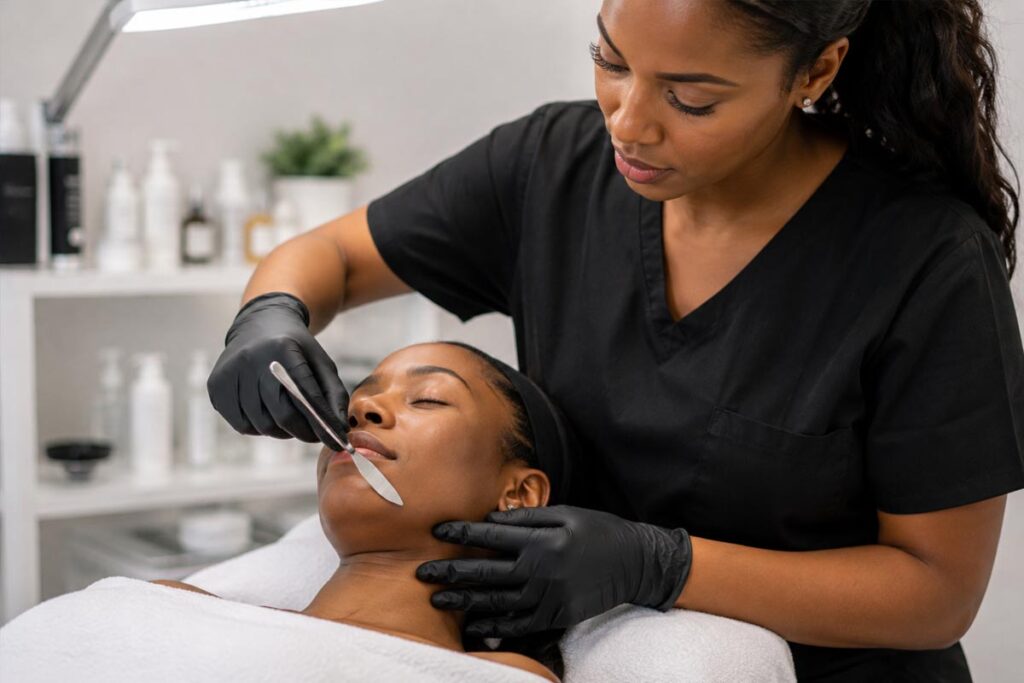
At its core, a galvanic facial is a skincare treatment that uses a very low-level electrical current to deeply clean the skin and help products absorb better.
It sounds technical, but the idea is simple:
👉 It helps push the good stuff into your skin
👉 And pull out the stuff you don’t want
That’s why it’s become a popular treatment in skincare services, especially in places like Delaware where advanced esthetic services are growing fast.
A galvanic facial works using positive and negative electrical currents.
This is one of your top-ranking query opportunities (“galvanic treatment positive and negative”), so here’s the clear version:
Think of it like a two-step process:
This is one of the most searched terms you’re gaining impressions for—and most articles explain it poorly.
Desincrustation is the deep cleansing phase of a galvanic facial.
It uses the negative current to:
In simple terms:
It turns hardened oil in your pores into a softer, soap-like substance that’s easier to remove.
That’s why people searching “desincrustation meaning” are usually trying to understand this exact step.
After cleansing comes the second phase: iontophoresis.
This step uses the positive current to:
👉 If desincrustation is about cleaning your skin,
👉 iontophoresis is about feeding and repairing it.
Most people expect something intense—but it’s actually very gentle.
You might feel:
Overall, it’s considered a relaxing, non-invasive treatment with no downtime.
Instead of generic claims, here’s what people actually notice after treatments:
This is why searches like “galvanic facial benefits” continue to grow.
Galvanic facials work especially well for:
It’s one of the few treatments that can help both acne-prone and dry skin, depending on how it’s used.
Even though it’s safe for most people, there are a few exceptions.
You should avoid galvanic facials if you have:
A licensed professional should always evaluate your skin first.
This is another high-intent comparison people search.
A galvanic facial focuses on:
A microcurrent facial focuses on:
👉 One works on the skin itself
👉 The other works on the muscles underneath
If your goal is better skin health, not just surface-level results—this treatment can be very effective.
It’s especially useful when combined with:
The biggest benefit isn’t just what happens during the treatment, it’s how it improves everything you use afterward.
People are moving away from harsh treatments and toward results-driven, non-invasive options.
Galvanic facials fit perfectly into that shift:
That’s why more spas and student clinics in Delaware are adding it to their service menus.
If you’re interested in performing treatments like galvanic facials professionally, training matters.
At TSPA Delaware, students in the esthetics program learn:
This hands-on experience helps prepare students for real careers in salons, spas, and skincare clinics.
📞 Call Admissions: (302) 207-4021
👉 Request information to start your journey in esthetics
A galvanic facial might sound complicated, but it really comes down to two powerful steps:
👉 Deep cleaning the skin
👉 Delivering nutrients where they actually matter
Once you understand desincrustation and iontophoresis, the treatment becomes much easier to evaluate, and much more appealing.