
Article summary: Cat eye nails have a glowing line of light that seems to float inside the polish. It looks like the eye of a cat. The effect comes from magnetic gel polish and a small magnet. This guide explains how the look works and how nail techs create it. You will also find holiday color ideas and common mistakes to avoid. Finally, you will see how the manicuring program at TSPA Delaware helps you build the skills behind trending nail art.
Quick takeaways
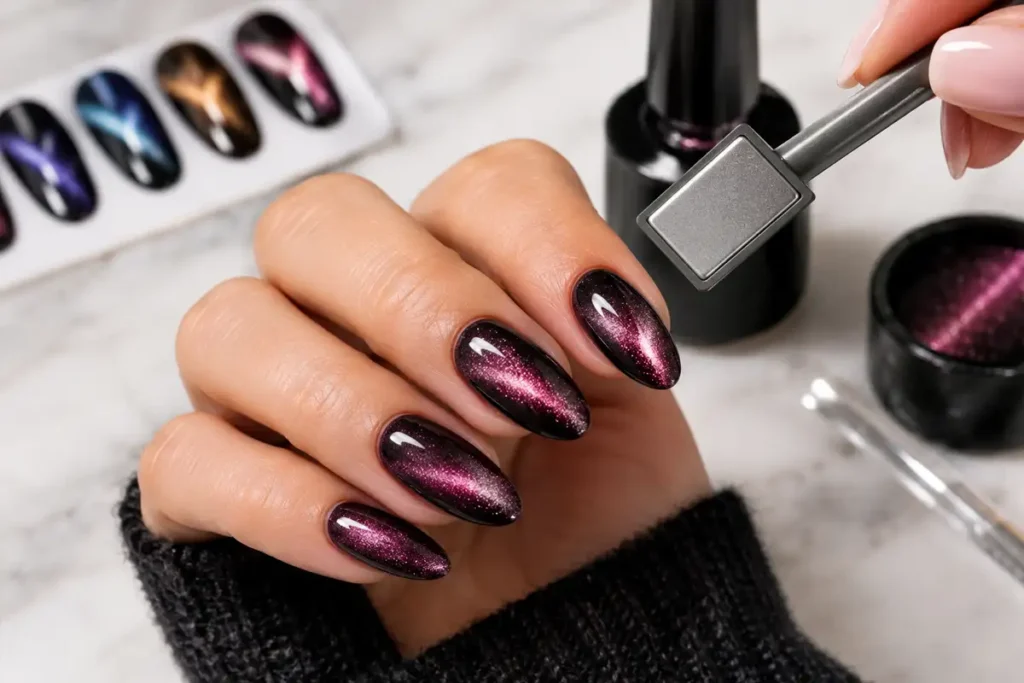
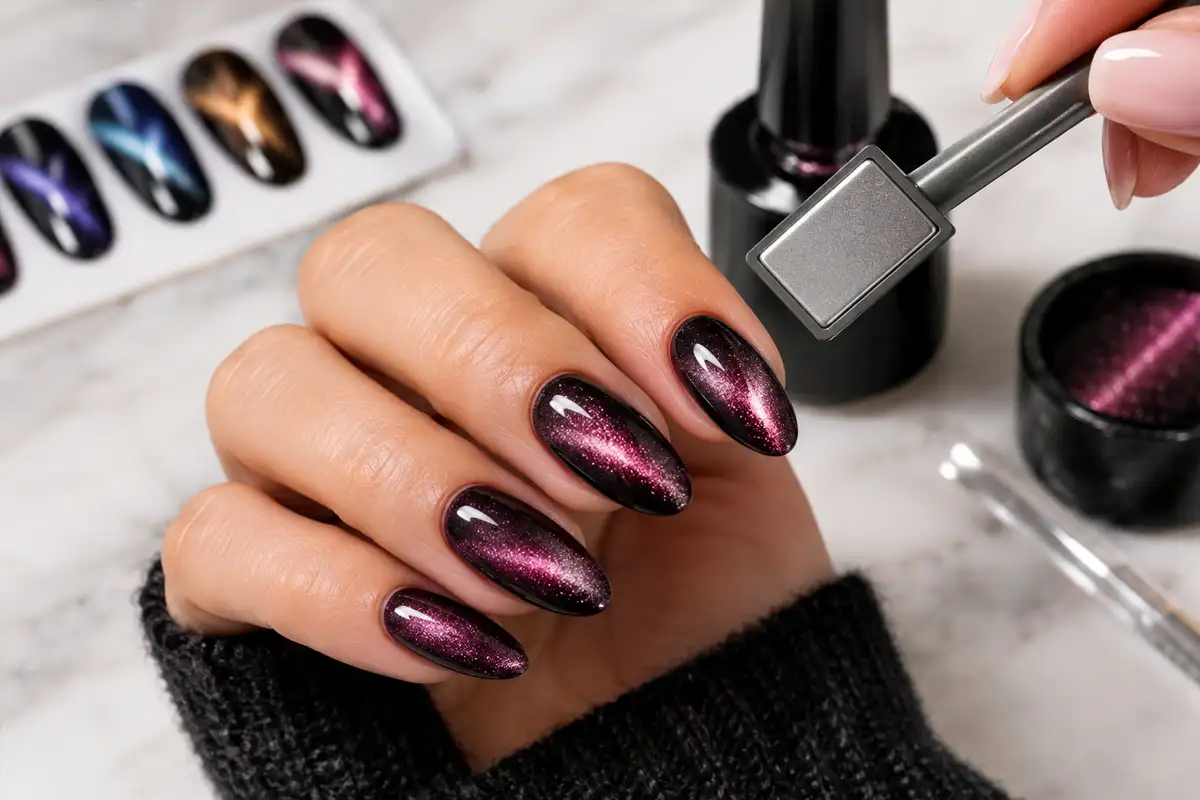
Cat eye nails are a gel manicure with a shimmering band of light. The band looks like it moves when your hand moves. It has depth, like a gemstone.
The name comes from the look of a cat’s eye. A thin line of light sits in the center of a dark color. That glow is what makes the style so eye-catching.
You may also hear these names:
They all describe the same idea. A magnet shapes the shimmer inside the polish.
Recent Google Trends data for Delaware shows “cat eye nails” as a breakout search. That means interest is rising quickly from a small base. It is an early signal, and it makes sense.
The look fits the season. Deep, glossy colors are popular in fall and winter. Cat eye makes dark shades feel even richer.
It looks high-end without extra steps. The shimmer does the work. One color can look like a custom design.
It is easy to personalize. You can change the color, the line, and the angle. You can even add accents, like polka dots or a French tip.
It looks great in photos. The glow shows up on camera. Clients love to share their nails.
Seasonal nail art is nothing new. See how last year’s looks compare in our fall nail trends post.
The science is simple. Magnetic gel contains tiny metallic particles. They float in the gel like glitter in a snow globe.
When the gel is still wet, the particles can move. A magnet pulls them toward it. The particles line up along the magnet’s field. That creates the glowing band.
Then the gel is cured in an LED or UV lamp. Curing locks the particles in place. The shimmer stays where the technician put it.
Two things control the final look:
Here is the basic process that professionals follow. Always follow the instructions from the product maker.
Good nail art starts with a clean base. The tech cleans the nail, shapes it, and prepares the cuticle area. This step helps the gel stay put and look smooth.
A thin base coat protects the natural nail. It also helps the color bond. The tech cures it as directed.
The tech applies a thin, even coat of magnetic gel. Thin layers work best. A thick coat can make the particles hard to move.
This is the key step. The tech holds the magnet close to the nail, but does not touch the wet gel. A few seconds is often enough to pull the particles into place.
Many techs keep the magnet steady while the lamp cures the gel. This helps lock in the line. Cure times vary by product and lamp.
Some shades need a second coat for full depth. Each layer is shaped with the magnet and cured.
A glossy top coat adds shine and protects the design. A no-wipe top coat keeps the finish crisp and clean.
The same polish can look totally different based on how you use the magnet. Here are four popular looks.
The classic cat eye. The magnet sits above the center of the nail. You get a bright vertical line.
Try it: with dark green or burgundy.
The magnet sits at an angle. The line crosses the nail. It feels modern and sleek.
Try it: with navy or chocolate brown.
The magnet is placed near one edge. The glow hugs the side of the nail. This one is soft and elegant.
Try it: with champagne or rose.
The magnet is held flat under or over the nail for a wider glow. The shimmer looks soft, like velvet.
Try it: with silver, blue, or violet.
Want to test these looks yourself? Use the simulator below. Move the sliders and watch the glow change.
Pick a color and a technique. Then move the sliders to shape the glow.
Real results depend on the polish, the magnet, and cure timing. Always follow the product directions.
Explore the manicuring programThe holidays call for rich color. These shades work well with the cat eye effect.
Cat eye pairs well with other nail art. A few ideas:
Detailed nail art takes practice. That is why technique matters as much as trends.
A trend gets people through the door. Skill brings them back.
To create a cat eye manicure well, a nail tech needs to know how to:
These skills carry over to every service. Once you can handle magnetic gel, you can handle many other types of nail art.
Curious what you will use in class? See what’s inside our nail tech student kit. Learn the nail industry’s language with our beauty industry terms guide.
Cat eye nails make strong portfolio pieces. The photos are bold. The details are easy to see.
Building a portfolio while you train is a smart move. Our guide to building your beauty portfolio while you’re still in school shows you how to start.
The manicuring program at TSPA Delaware is built for people who love nails. You learn the basics first. Then you build toward more advanced skills.
In the program, you can expect to work on:
You also get hands-on practice, which is the best way to build confidence.
Wondering how the path works? Read our guide on how to become a nail tech in Delaware. Not sure if it’s the right fit? Take the “Should I be a manicurist?” quiz.
Clients can also see student work in action. Visit our salon services page to learn what is offered.
Ready to turn your love of nails into a career? Contact TSPA Delaware to schedule a tour.
Cat eye nails are a gel manicure with a glowing line of shimmer. A magnet pulls tiny metallic particles in the polish into a band. The band looks like the eye of a cat.
Magnetic gel polish contains fine metallic particles. A magnet is held near the nail while the gel is still wet. The particles move toward the magnet and form a line. Then a lamp cures the gel and locks the design in place.
Yes. You need magnetic gel polish. Regular polish does not contain the particles that respond to a magnet. You also need a magnet and a curing lamp.
It depends on prep, application, and daily habits. A well-applied gel manicure often lasts for a few weeks. Good prep and a solid top coat help the most.
Dark and jewel tones show the effect best. Burgundy, emerald, navy, chocolate, and silver are popular. Lighter shades also work, but the glow is softer.