
Barber school teaches you to cut, fade, shape, and shave with precision. At TSPA Delaware in Dagsboro, the Master Barbering program is hands-on and built around real clients. This guide explains what you can expect to learn, how a fade works, and what the training looks like. You will also find a simple fade finder, tips for choosing a barber school, and answers to common questions.
Quick takeaways
A master barber is a trained professional who specializes in men’s and short-hair cutting, grooming, and shaving. Many barbers also work with all hair types and styles.
Barbering is a craft. It rewards steady hands, sharp eyes, and strong people skills. A great barber also knows how to make a client feel at ease.
Want to see how barbering compares with cosmetology? Read our post on master barber vs. cosmetologist.
Barbershops are more than a place for a haircut. They are community spaces. Clients come back week after week. They talk, laugh, and build trust with their barber.
That is why barbering can be so rewarding. Here is what many people love about it:
Looking to build a client list over time? Read about barbering as a business.
Barber school covers a lot of ground. Here are the core areas that barbering training typically includes.
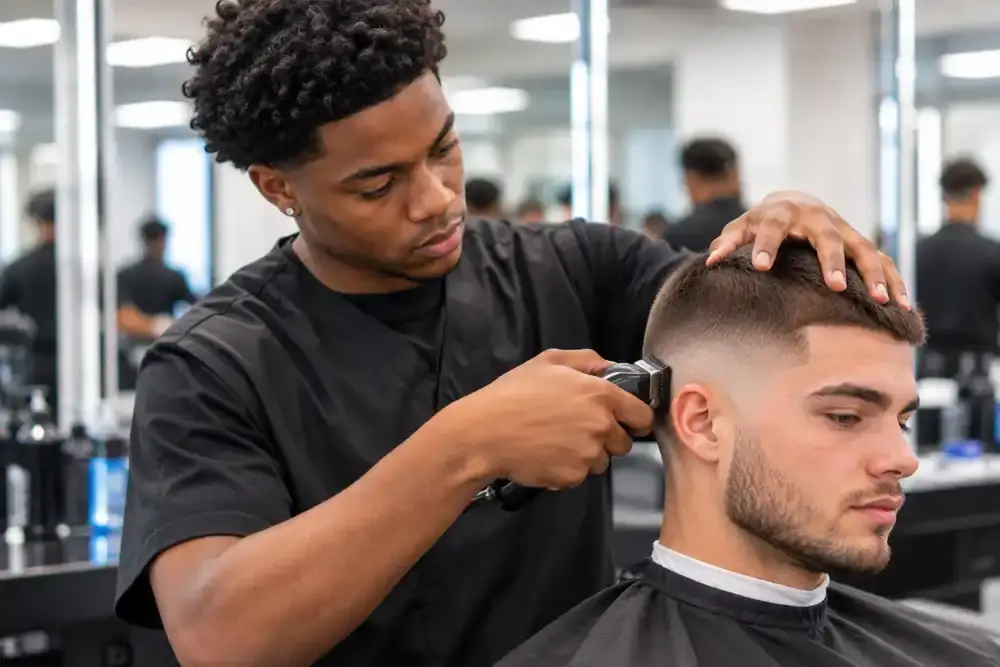
Fades are the signature skill of a modern barber. You learn how to move clippers smoothly and blend lengths with no harsh lines. It takes practice, which is why hands-on time matters.
A taper keeps the sides and back neat while leaving more length on top. You learn to shape clean necklines and sharp edges.
Not every cut is clipper work. Shears let you add texture, soften lines, and handle longer styles.
Beards are a big part of the job. You learn how to shape, trim, and line up a beard to suit the face.
A classic shave is part skill and part experience. You learn safe razor handling, skin care basics, and the calm, smooth flow of a hot towel service.
Barbers work with sharp tools, so safety matters. You learn how to clean, disinfect, and handle tools the right way. You also learn how to keep every client safe.
Every great cut starts with a conversation. You learn to ask the right questions and explain your plan.
You learn about booking, rebooking, and building your clientele. These skills help you grow after graduation.
Want to know what else beauty students pick up along the way? Read what you learn in cosmetology school that will surprise you. Many of those lessons apply to barbering too.
Fades are one of the most searched haircut styles. They are also the most requested skill in many shops.
A fade blends short hair at the bottom into longer hair on top. The difference between fade types comes down to where the fade starts.
Not sure which one to ask for? Try the fade finder below. It shows where each fade starts and what it looks like.
Pick a fade to see where it starts. Skin tone is at the bottom, hair is on top.
Starts low, near the ears and neckline. Most of the side stays longer.
Look: Subtle and easy to wear.
Starts about halfway up the sides. A balanced, popular middle ground.
Look: Clean with some contrast.
Starts high, near the temples. Short sides with strong contrast.
Look: Bold and sharp.
A soft blend that stays close to natural length. No bare skin.
Look: Neat and classic.
Blends all the way down to the skin at the bottom.
Look: Crisp and modern.
Simple illustration. Your barber will tailor the blend to you.
Explore Master BarberingGreat barbers are not made overnight. Training builds in layers. Here is a simple picture of how it often works.
You start with tools, safety, and the basics. You learn how to hold clippers and shears. You also learn how to set up a clean station.
You practice cuts and fades again and again. Mannequins give you a safe place to learn. Your instructors guide your hands and correct small mistakes.
Then you work with real guests on the clinic floor. This is where skill meets confidence. You talk with clients, plan the service, and finish the look. See what is offered on our salon services page.
You build a portfolio and learn how to book clients. You also practice professional habits like time management and teamwork. Read how to start building your portfolio while you’re still in school.
The holiday season keeps barbershops busy. People want a fresh cut before parties, family photos, and the new year. Beard trims and sharp lines are popular too.
It is also a natural time to plan a career change. Many people start thinking about new goals as the year ends. If barbering sounds interesting, a tour is an easy first step.
Barber school may be a great fit if you:
Not sure yet? Read about why career changers are choosing beauty careers. You can also learn how beauty school fits a hands-on career path.
Use this list when you visit any school.
Barbering is one of several hands-on paths at our Dagsboro campus.
Not sure which one fits? See which TSPA program is right for you.
The best way to learn about barber school is to see it. Walk the campus, meet the team, and ask your questions.
Ready to look around? Learn about the Master Barbering program or contact TSPA Delaware to book a tour.
Yes. TSPA Delaware offers a Master Barbering program at its campus in Dagsboro. The program is hands-on and built around real practice. Book a tour to see it in person.
The Master Barbering program is about 1,500 hours. Ask our admissions team about schedules and the timeline that fits your life.
You learn clipper work, fades, tapers, shear cutting, beard shaping, shaves, and sanitation. You also learn consultations and business skills. Training combines practice and real client time.
A master barber focuses on cutting, grooming, and shaving. A cosmetologist works across hair, skin, and nails. Both are hands-on careers. Read our full guide to master barber vs. cosmetologist.
Many beauty students start with no experience. The program teaches you from the basics. Our admissions team can explain entry details when you visit.
Yes. Fades are a key skill in barbering. You practice blending, tapers, and clean lines until your technique feels smooth.
Yes. We encourage it. You can walk the campus, meet instructors, and see the clinic floor. Contact us to schedule a visit.