
Yes. Cosmetology school is a trade school in the way most people use the term. It teaches a hands-on skill for a specific career. You learn by doing, with real tools and real clients. At TSPA Delaware, students earn a certificate, not a four-year degree. This guide explains what a trade school is, how beauty school compares with college, and what a typical program looks like. You will also find a short myth-or-fact game and a checklist for choosing the right school.
Quick takeaways
Cosmetology school is a trade school. Some people also call it a vocational school or a career school. These terms all point to the same idea. You train for a specific job, and you spend most of your time practicing it.
There is one thing to know. Cosmetology school is not a traditional college. You do not spend years on general classes. You focus on the skills you will use every day in a salon, spa, or barbershop.
A trade school teaches a skilled career. The goal is simple. You finish ready to work in that field.
Trade schools usually share these traits:
Plumbing, welding, and electrical work are common examples. Beauty belongs on that list too. Hair, skin, nails, and barbering are all skilled trades.
Think about what a stylist does all day. They cut, color, style, and talk with clients. None of that can be learned from a book alone. It takes practice.
That is why cosmetology training looks like a trade program.
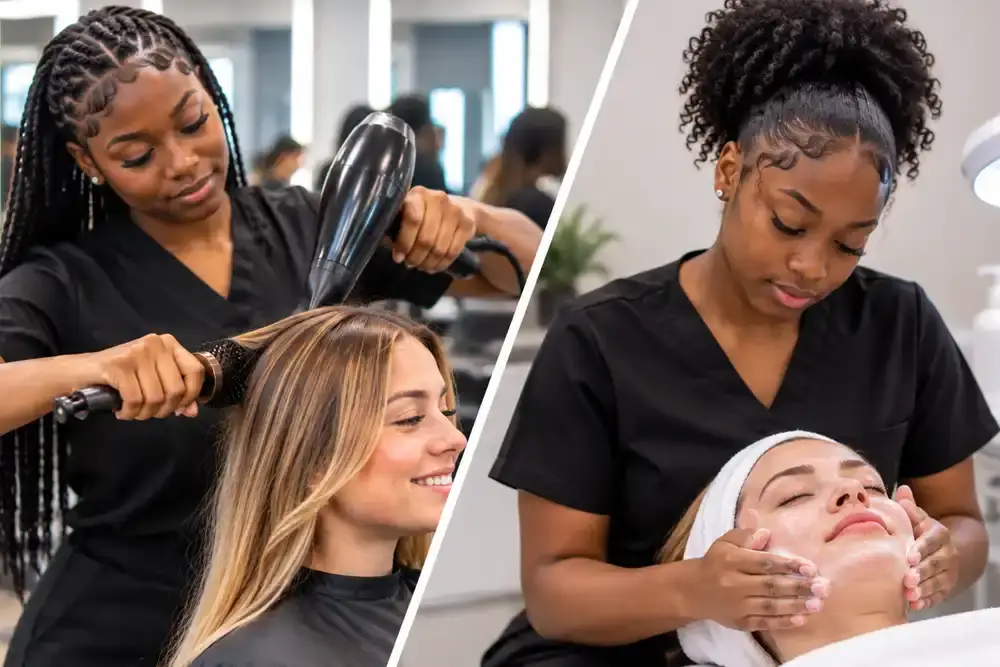
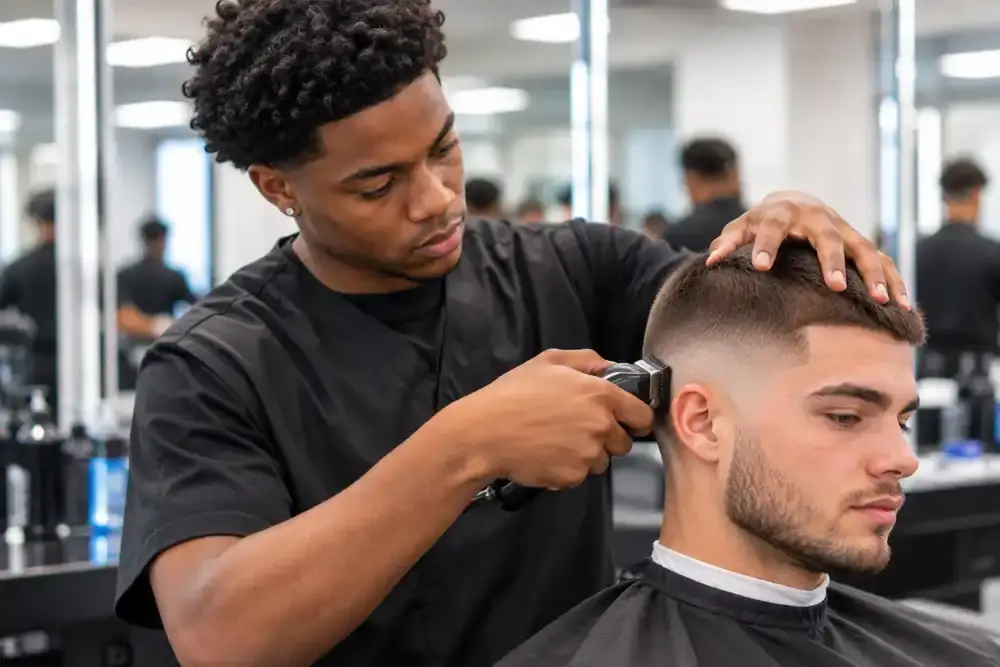
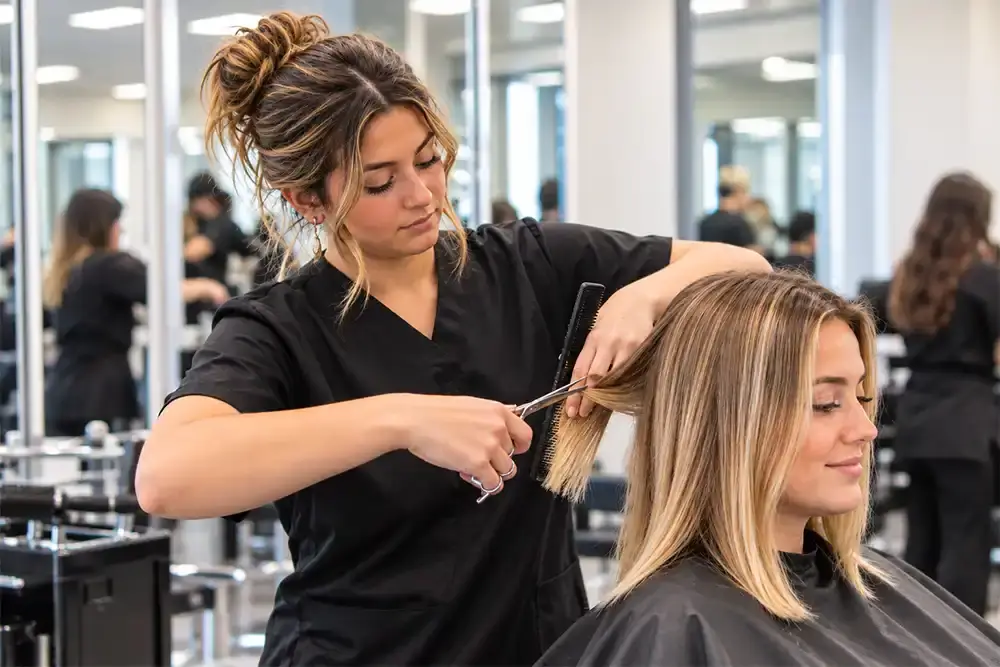
You learn by doing. Students practice on mannequins first. Then they move to real clients.
You build muscle memory. Smooth blending and clean lines come from repetition.
You learn safety and sanitation. Clean tools and safe habits protect every client.
You learn people skills. Consultations, listening, and service are part of the job.
You learn business basics. Booking, retail, and building a clientele matter just as much as technique.
Curious about the core skills? Read about the five most important skills in cosmetology school.
Both paths are valid. They are built for different goals. Here is a quick look.
| Trade school (like TSPA) | Traditional college | |
|---|---|---|
| Main focus | One career skill set | Broad academic subjects |
| How you learn | Mostly hands-on practice | Mostly lectures and papers |
| Program length | Set hours, often about a year for cosmetology | Often two to four years |
| What you earn | A certificate | A degree |
| Best for | People who learn by doing | People who want a broad academic path |
Wondering how this compares with a degree or diploma? Our guide explains whether this training is a degree, diploma, or certificate.
Hands-on training is getting more attention across the state.
Delaware named February Career and Technical Education Month in 2026. The month highlights programs that teach job skills in real settings. Then, on August 18, 2026, the state announced a record 2,117 registered apprentices. That shows how many people are choosing learn-by-doing careers.
Apprenticeships and trade schools are not the same thing. Still, they share a big idea. Skills matter, and practice builds them.
Beauty fits that idea well. A stylist, barber, esthetician, or nail tech builds a career with skilled hands.
Want to see why Delaware is a strong place to start? Read our post on why Delaware is a great place to become a beauty professional.
Now, test what you know. Try the myth-or-fact game below.
Tap a card to see the answer.
Myth. You learn product science, skin and hair basics, and safety and sanitation. Hands-on practice builds on that knowledge.
Fact. Trade programs put tools in your hands early. You practice, get feedback, and practice again.
Myth. Mannequins come first. Then you work with real guests on the clinic floor.
Fact. At TSPA Delaware, students earn a certificate when they complete a program.
Myth. Beauty skills open many doors, from salons and spas to barbershops and your own business.
A good program keeps you busy with real work. Here is what that can look like.
You learn tool names, safety rules, and core techniques. You also learn how to set up a station and keep it clean.
Mannequins let you try cuts, color, and styles with room to learn. Your instructor gives feedback as you go.
This is where theory becomes real. You work with guests in the student salon. You talk with them, plan the service, and finish the look. See what is offered on our salon services page.
You practice rebooking, retail, and client care. You also start building a portfolio. Our guide to building your beauty portfolio while you’re still in school shows you how.
Want a closer look at the daily rhythm? Read a day in the life of a cosmetology student.
TSPA Delaware offers several hands-on programs at one Dagsboro campus. Each one is a focused path.
Not sure which one to pick? See which TSPA program is right for you. To understand the timeline in detail, read how long it takes to complete cosmetology school.
Trade school tends to suit people who say yes to most of these:
If that sounds like you, take our short “Is cosmetology right for me?” quiz. You can also read why career changers are choosing cosmetology.
Parents often have questions too. Our parent’s guide to beauty school answers many of them.
When you compare schools, ask good questions. Use this list on every tour.
New to the idea of beauty school? Our post on what to expect in cosmetology school is a good place to start.
If you learn best with your hands, a beauty trade school may be a great fit. The best way to know is to see it.
Ready to look around? Contact TSPA Delaware to book a tour of our Dagsboro campus.
Yes. Cosmetology school is a trade school in the common sense of the term. It teaches a hands-on career skill set. Students spend most of their time practicing real services.
It is a vocational, or career, program. It is not a traditional two-year or four-year college program. You focus on the skills for your chosen field instead of general subjects.
At TSPA Delaware, students earn a certificate when they complete a program. It is not a college degree. You can read more in our guide to degrees, diplomas, and certificates.
It depends on the program. Cosmetology is about 1,500 hours, which averages around 13 months. Esthetics is about 600 hours. Manicuring is about 300 hours. See our how-long guide for details.
TSPA Delaware is located in Dagsboro. It offers cosmetology, master barbering, esthetics, manicuring, and advanced education courses. Book a tour to see the campus.
For most beauty careers, a hands-on program is the direct path. It focuses on the skills you will use every day. College can be a good choice for other goals. The best option depends on how you like to learn and what you want to do.