
Article summary: Cosmetology school teaches far more than how to cut hair or apply color. The most valuable skills students build during training are the ones that shape an entire career: technical precision, client communication, creative thinking, business awareness, and the discipline of continuous learning. These five skills work together in every professional setting, from a busy salon floor to an editorial shoot to an independent suite. This article breaks each one down, explains how it develops during training, and shows why it matters long after graduation day.
When people think about what cosmetology school teaches, they usually picture the technical side. Hair cutting, color mixing, chemical services, skin treatments. And yes, all of that is real and rigorous. But the professionals who build lasting careers in the beauty industry lean on a different set of skills just as heavily as the technical ones.
These are the skills that determine whether a talented technician builds a loyal client base or struggles to hold onto one. They are the skills that separate a good beauty professional from an exceptional one. And they all develop, intentionally, during cosmetology training.
Precision is the foundation everything else rests on. A client who sits in your chair is trusting you with their appearance. That trust is earned or lost in the quality of the work itself.
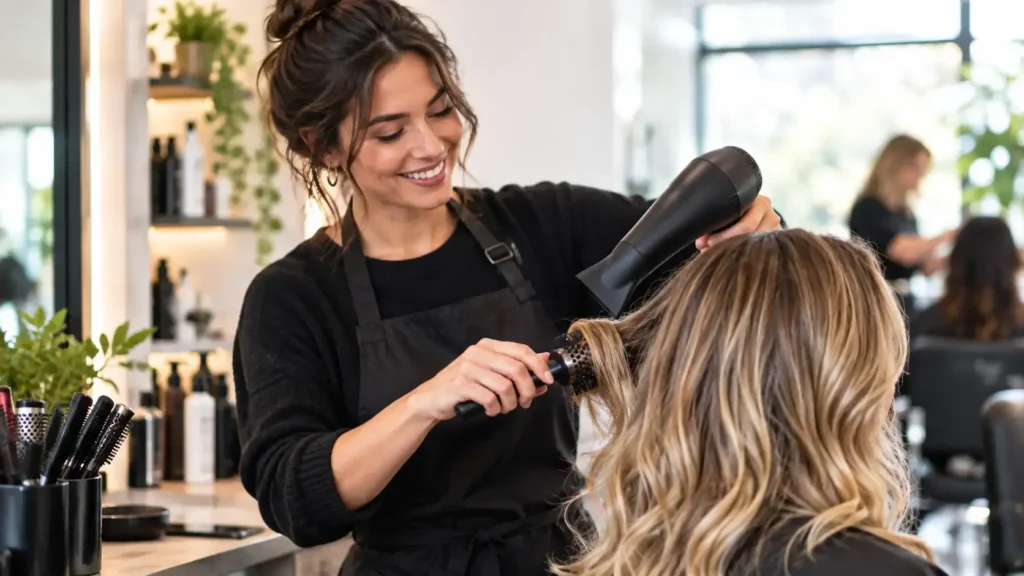
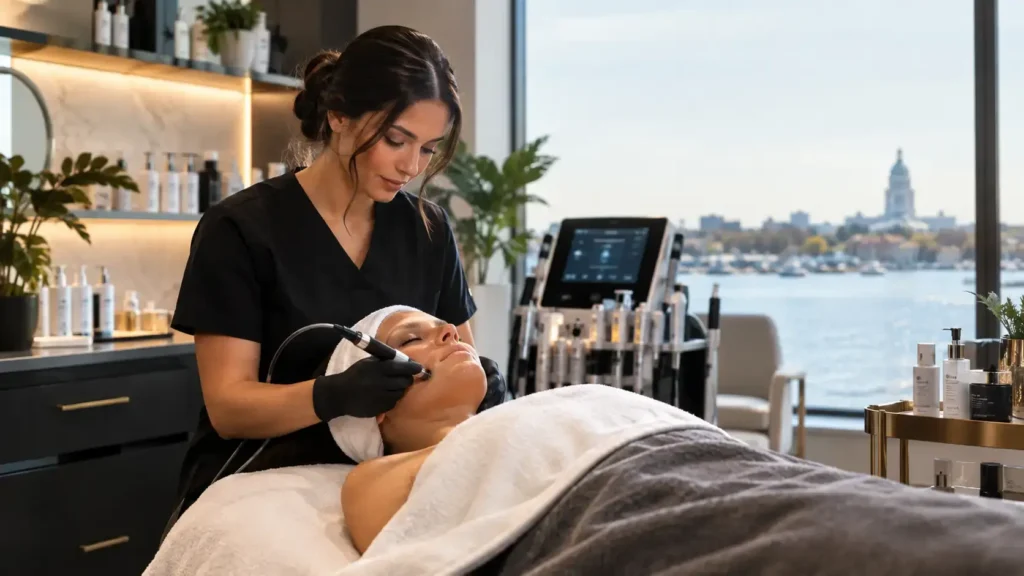
Technical precision in cosmetology is not just about doing a service correctly once. It is about doing it correctly consistently, across different hair types, skin conditions, and service requests, often under time pressure in a busy environment. That level of consistency takes repetition. It takes attention to the details that less experienced professionals overlook, the angle of a section, the tension on a strand, the timing of a chemical service, the pressure of a facial blade against the skin.
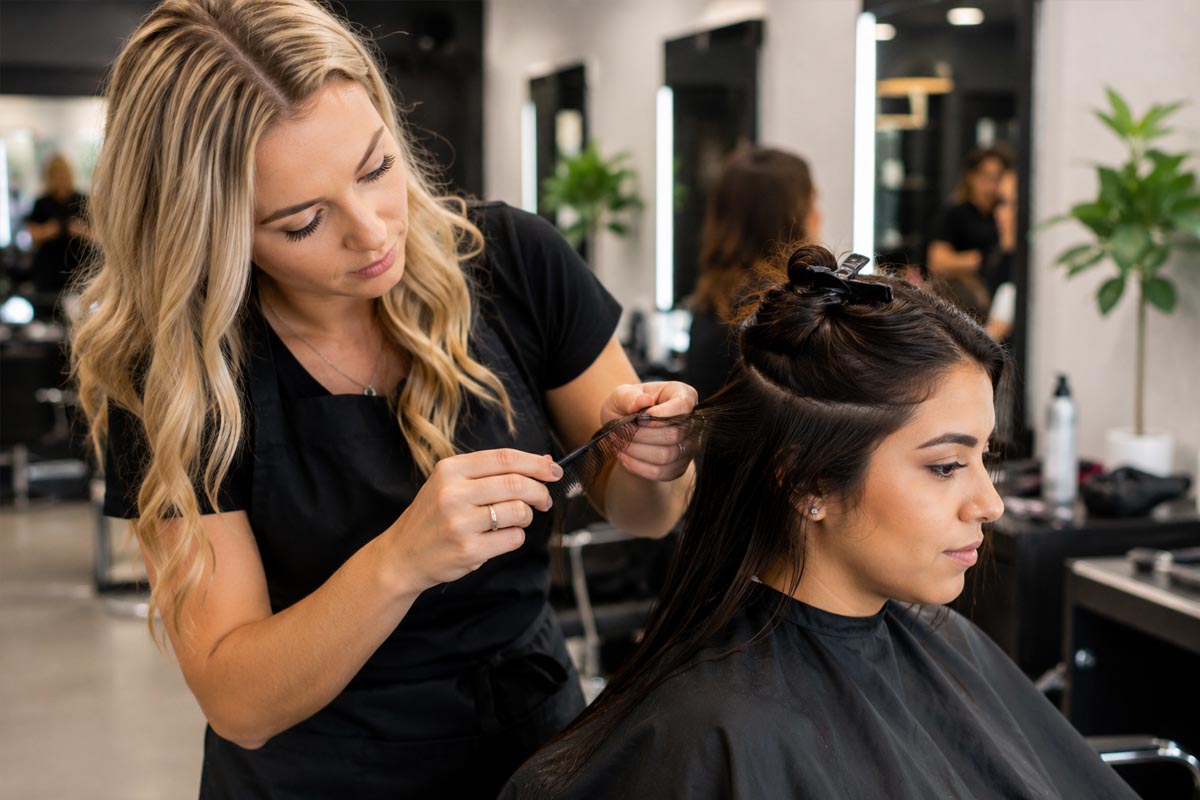
Cosmetology school builds precision through repeated hands-on practice on real clients under instructor supervision. Students make mistakes in a supported environment where those mistakes become learning moments rather than client disasters. That supervised repetition is what makes the difference between a student who understands a technique theoretically and a graduate who can execute it reliably on their first solo client.
The cosmetology program at TSPA Delaware incorporates real client hours throughout the curriculum rather than concentrating them at the end, which means students develop precision progressively rather than in a compressed rush before graduation.
A stylist or esthetician who cannot communicate effectively with clients will struggle regardless of how skilled their hands are. Client communication is not just about being friendly. It is a professional skill with real structure to it.
Effective client communication starts with the consultation. That conversation determines what the client actually wants, whether what they are asking for is achievable with their current hair or skin, how to set honest expectations, and how to redirect the conversation when a client’s vision does not match reality. Getting the consultation right prevents most of the problems that cause clients not to return.
Communication also includes how a professional explains what they are doing during a service. Clients who understand why their esthetician is recommending a particular treatment, or why their stylist is approaching a color service a specific way, feel more confident and more satisfied with their results. That understanding is built through how the professional communicates, not just through the outcome of the service.
Beyond the chair, communication extends to managing appointments, handling complaints gracefully, and building the kind of rapport that makes clients feel genuinely cared for rather than processed. All of these develop through the client interaction hours built into a cosmetology program.
No two clients are the same. No two heads of hair are the same. No two skin conditions present exactly the same way. That variability is one of the things that makes beauty work engaging, but it also means that rigid, recipe-based thinking breaks down quickly in the real world.
Creative problem-solving in cosmetology means being able to assess what is actually in front of you and adapt accordingly. It means knowing when the approach that works on most clients will not work on this client, and knowing what to do instead. It means finding solutions when a color result is not what was expected mid-process, or when a client arrives with a reference photo that is not achievable with their current hair in a single session.
This skill develops through exposure to diversity. Students who work with a wide range of client types, hair textures, skin tones, and service requests during training build a mental library of experience that makes them more adaptable as professionals. That adaptability is what clients often describe when they say they trust their stylist completely.
Creative thinking also connects directly to the broader range of opportunities available with a cosmetology background. The career paths beyond the salon chair page covers how this skill translates across editorial work, product education, and other professional environments where creative problem-solving is central to the role.
The beauty industry is a business industry. Understanding that reality early, and developing habits around it during training, makes a significant difference in long-term earning potential and career satisfaction.
Business awareness in cosmetology shows up in several practical ways. It includes understanding how to build and retain a client base, how to price services to reflect skill and market positioning, how retail product recommendations serve both the client and the professional’s income, and how scheduling and time management directly affect daily earnings.
It also includes knowing how a salon or spa business operates from the inside: what booth rental means versus commission employment, how commission structures work, what independent suite ownership involves, and how to evaluate a compensation offer for a first job. Students who graduate with even a foundational understanding of these realities are in a considerably stronger position than those who never think about them until they are already working.
Cosmetology programs that take this seriously weave business education into the curriculum rather than treating it as an afterthought. The practical business knowledge developed during training is one of the more underappreciated aspects of what a strong cosmetology education actually delivers.
The beauty industry changes. Trends evolve. New products enter the market. New techniques develop. New research emerges about ingredients, skin biology, and chemical processes. A professional who stops learning when they finish school is working with a shrinking skill set in an industry that never stops moving forward.
The habit of continuous learning is one of the most important things a cosmetology program instills, often without making a formal point of it. Students who are regularly introduced to new techniques, new product lines, and updated best practices during their training develop the expectation that learning is a permanent part of professional life, not something that ends at graduation.
That expectation pays off in concrete ways. Professionals who pursue continuing education, attend industry events, seek out mentors, and invest in specialty training stay relevant. They have more to offer clients. They adapt more easily when market trends shift. And they consistently have more career options available to them than those who rely solely on what they learned years earlier.
For those ready to take that next step after foundational training, TSPA Delaware’s Advanced Education Program is designed specifically for working beauty professionals building on their existing skills. The nine reasons to pursue a cosmetology career page also covers the broader case for why this field rewards those who commit to it fully.
None of these five skills operates in isolation. They reinforce each other constantly.
Technical precision builds client trust. Client trust opens up honest communication. Honest communication reveals what a client actually needs, which requires creative problem-solving to deliver. Delivering excellent results supports a strong business. And all of it improves over time through continuous learning.
A professional who develops all five during training enters the industry with a foundation that holds up across every environment and every stage of a career. That is what a genuinely rigorous cosmetology education is actually building, not just a set of hands that can perform services, but a complete professional who can build a lasting career.
For anyone exploring what that training looks like in practice, the program pages for cosmetology, esthetics, and master barbering at TSPA Delaware lay out exactly what each track covers and how students progress through it.
The most important skills in cosmetology extend beyond technique alone. Technical precision, effective client communication, creative problem-solving, business awareness, and the discipline of continuous learning together form the foundation of a successful long-term beauty career.
Cosmetology school covers hands-on technical training in hair, skin, and nail services alongside the science behind products and chemical processes, client consultation and communication skills, state regulations and professional standards, and foundational business knowledge relevant to working in the industry.
Client communication determines whether a client returns. A strong consultation prevents misunderstandings before a service begins. Clear explanation during a service builds confidence and trust. And ongoing rapport turns one-time appointments into long-term professional relationships that sustain a career.
Yes. Cosmetology programs include business education covering topics like client retention, service pricing, retail sales, and how salons and independent businesses operate. Understanding the business side of beauty early gives graduates a significant advantage when they enter the workforce.
Absolutely. The technical and interpersonal skills developed in cosmetology school translate to editorial styling, product education, spa management, teaching, bridal work, film and media production, and many other professional environments beyond the traditional salon setting.