
Article summary: Cherry cola hair color is a deep red-brown shade with a glossy cherry shine. It looks rich in low light and glows in the sun. This guide explains what the color is, which shade fits you, and how colorists build it. You will also learn how to keep it from fading. Finally, you will see how students at TSPA Delaware learn color theory and hands-on color skills.
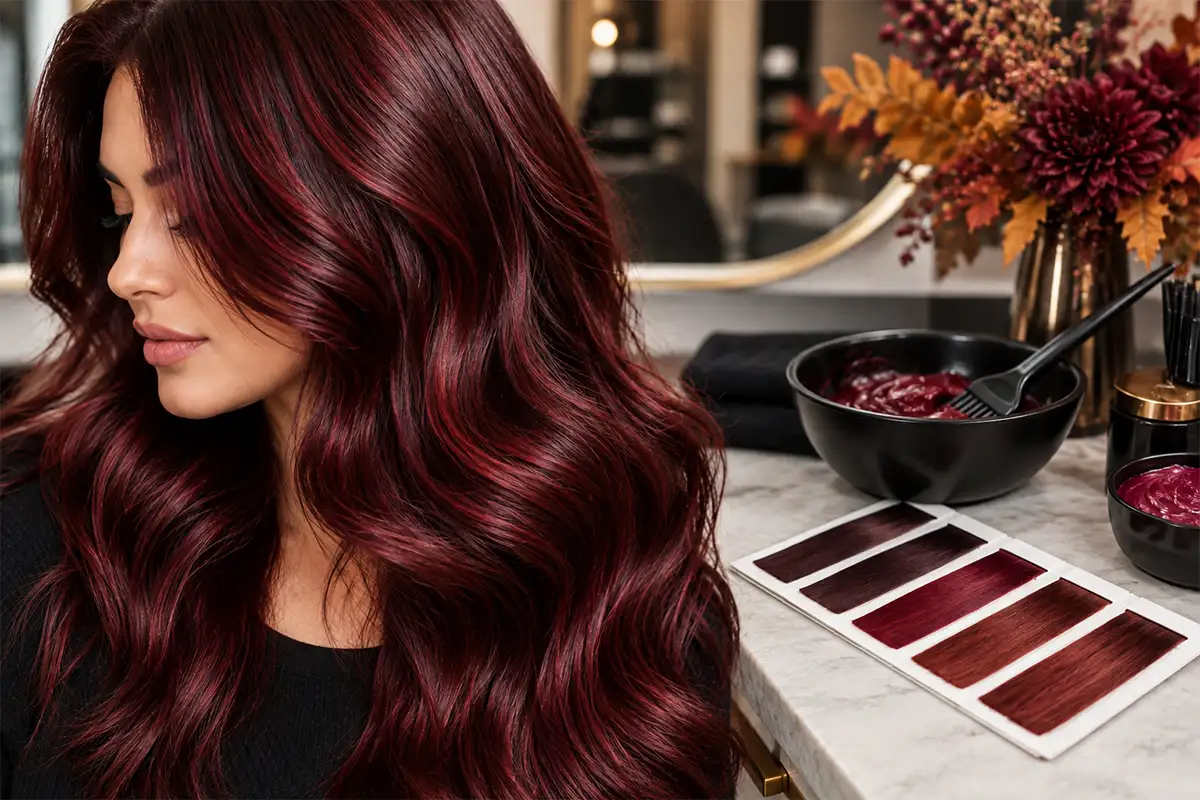
Cherry cola hair color is a rich blend of dark brown and cherry red. Think of a glass of dark soda in warm light. You see brown first. Then you see a red glow.
The shade sits between a classic brunette and a bold red. That is why so many people like it. It feels fresh, but it is not too loud. You can wear it to class, to work, or to a holiday party.
It is also easy to style. Soft waves show off the color. Sleek straight hair makes it look like glass. Curls add depth and movement.
People search for this look under many names:
They all point to the same idea: dark hair with a red shine.
Searches for cherry cola hair have climbed fast this year. There are a few clear reasons.
1. Fall loves warm, deep color. When the weather cools, people want richer shades. Reds and browns feel cozy. They match sweaters, boots, and candlelight.
2. It is a gentle step up from brunette. Many clients want something new. They do not want a big change. Cherry cola adds dimension to brown hair without a full reset.
3. It photographs well. The shine looks great on social media. Clients bring photos to their stylists. Colorists need to know how to read those photos and turn them into a plan.
4. It fits the holiday season. More events fill the calendar from November to January. Clients book color first. Then they book the cut and style.
If you want to see last year’s seasonal looks, read our holiday hair trends post. Then come back here for the shade that is rising now.
Not every cherry cola is the same. Colorists adjust the tone to match the client. Here are four popular versions.
This is the most natural version. It is a medium to dark brown with a soft cherry glow. The red shows up mostly in the light.
Best for: clients who want a subtle change and lower upkeep.
This shade leans more toward wine. The red-violet tone is easier to see. It looks bold in photos and still feels grown-up.
Best for: clients who want visible color without going bright.
This is the darkest option. It looks nearly black, then flashes deep red in the light. The tone is cool and sleek.
Best for: clients with dark natural hair and cool undertones.
This version adds warmth. You get a red-brown with a hint of copper. It glows in the sun and feels like autumn leaves.
Best for: clients with warm undertones or golden skin.
Most people can wear this color. The key is picking the right tone. A good colorist looks at three things.
Skin undertone. Cool undertones often look great in black cherry and burgundy. Warm undertones often shine in copper cherry. Neutral undertones can go either way.
Starting hair color. Dark hair needs little or no lightening. Lighter hair may need a deeper base first, so the red does not turn out too bright.
Lifestyle. Some clients love a quick wash-and-go routine. Others enjoy regular salon visits. The right shade should fit the routine.
Not sure where you land? Try the quiz below. It takes less than a minute.
Answer 3 quick questions. See which version of the trend fits you best.
Great color starts before any product touches the hair. Here is the basic process that professionals follow.
The colorist asks about goals, hair history, and daily routine. They also check the hair’s condition. Healthy hair holds color better.
Every head of hair has a natural level, from very dark to very light. Every head also has an underlying tone. Colorists use the color wheel to plan around it. This is why color theory matters so much.
Cherry cola usually combines a dark brown base with red and red-violet tones. Warm versions add a touch of copper. Cool versions add more violet. The exact formula depends on the client’s hair and the product line.
Sectioning keeps the work clean and even. Careful brush control keeps the color off the skin. Timing matters too. Too short and the color looks weak. Too long and it can look flat.
Many stylists finish with a gloss. It adds shine and helps lock in tone. It is also a smart way to refresh the color between full appointments.
This step is easy to skip, but it is one of the most important. A client who knows how to care for red tones keeps the color longer.
Red pigment is a small molecule. It slips out of the hair more easily than brown. These habits help.
Want more healthy-hair habits? Our at-home haircare tips cover the basics. Healthy hair starts at the root, so our guide on why your scalp is skin is worth a read too.
Trends change every season. Strong skills do not. When you learn color at TSPA Delaware, you practice the basics that every shade depends on.
In our cosmetology program, you build skills in:
You also learn how to use professional tools. See what you will work with in our guide to cosmetology tools and our cosmetology student kit.
Want a closer look at the skills? Read the top 5 skills you’ll master in beauty school and the five most important skills in cosmetology school.
Practice matters most. Students work with real clients in our student salon. See what is offered on our salon services page.
If you love color, you may love this career. Colorists get to turn ideas into real results. Every client leaves with something new.
Not sure yet? Take our short “Is cosmetology right for me?” quiz. It helps you think through your strengths and goals.
Ready to start? Contact TSPA Delaware to tour our Dagsboro campus and meet our team.
Cherry cola hair color is a deep red-brown shade. It has a dark brown base with cherry red and red-violet tones. The red shows up most in light and gives the hair a glossy glow.
They are close, but not the same. Burgundy is usually more violet and wine-colored. Cherry cola leans more brown with a softer red shine. Many people mix the terms, so bring a photo to your stylist.
Yes. Dark hair is a great starting point. Many dark-haired clients can get the look with little or no lightening. A stylist can tell you what your hair needs after a quick consultation.
It depends on your hair, your wash routine, and your products. Red tones tend to fade sooner than brown. Many clients refresh with a gloss every four to six weeks. Color-safe care helps the shade last longer.
Wash less often and use lukewarm water. Choose color-safe shampoo and conditioner. Use heat protection when styling. A color-depositing conditioner can also add tone back between salon visits.