
Article summary: Many famous haircuts are more than fashion trends. They represent technical breakthroughs, cultural shifts, and timeless cutting methods that continue to influence salons today. Cosmetology students study these iconic styles because they teach precision, balance, texture, and client communication. Understanding the history behind these cuts also helps future professionals build stronger technical skills and recommend styles that fit each client’s face shape, lifestyle, and hair type.
Some haircuts never go out of style.
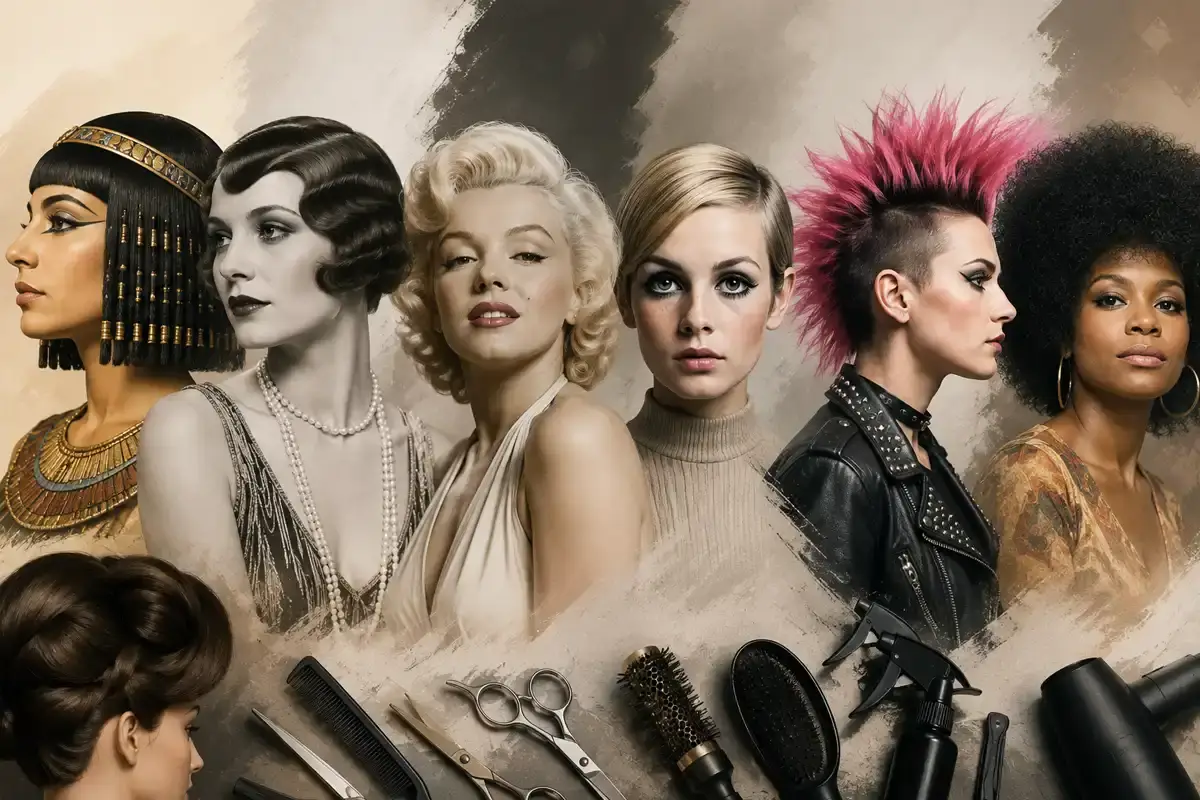
They continue to appear in salons, fashion shows, movies, and social media because the techniques behind them still work today. While trends come and go, great haircutting is built on timeless fundamentals.
For cosmetology students, famous hairstyles offer more than inspiration. They become practical lessons in sectioning, elevation, weight distribution, texture, precision, and client consultation.
Learning how these historic cuts were created helps students understand why modern techniques evolved the way they did.
If you are considering beauty school, studying iconic hairstyles is one of many ways cosmetology education combines creativity with technical skill. If you are exploring what students learn throughout their education, our guide to Cosmetology Career Paths Beyond the Salon provides a broader look at where these skills can take you after graduation.
Every haircut tells a story.
Some reflected changing beauty standards.
Others challenged social norms.
Many introduced cutting methods that are still taught today.
Rather than memorizing hairstyles, cosmetology students learn the technical principles behind them. This allows them to recreate classic looks while adapting them for today’s clients.
Students practice how to:
These skills transfer to nearly every haircut offered in a modern salon.
Few haircuts have influenced cosmetology as much as the bob.
Popularized during the 1920s, the bob symbolized independence and modern fashion. Women embraced shorter hair as lifestyles changed and beauty standards evolved.
For students, the bob teaches precision.
Even a slight difference in length becomes noticeable.
Students learn how to:
Today’s bobs range from sleek and blunt to textured and layered, but the technical foundation remains the same.
Mastering a classic bob helps students understand precision cutting before moving into more advanced designs.
Hair history often points to Vidal Sassoon as one of the industry’s greatest innovators.
His geometric cuts transformed salon education.
Instead of relying heavily on teasing and hairspray, Sassoon focused on structure. Hair moved naturally because the haircut itself created the shape.
Students studying these techniques learn:
Many modern precision cuts still reflect these concepts.
Even if clients never request a classic five-point cut, the techniques behind it appear in countless contemporary hairstyles.
The shag haircut gained popularity during the 1970s.
Unlike structured precision cuts, the shag celebrated movement and texture.
Layers became softer.
Volume appeared more natural.
This style teaches cosmetology students an entirely different approach to haircutting.
Instead of focusing only on clean lines, students learn how to remove weight strategically while maintaining shape.
Texturizing techniques become especially important.
Students practice using:
Today’s wolf cut and butterfly haircut both borrow heavily from classic shag principles.
Understanding the original version helps students adapt these trends for modern clients.
Short hair demands accuracy.
The pixie haircut has remained popular for decades because it highlights facial features while creating a polished appearance.
Cosmetology students quickly discover that short cuts leave little room for error.
Every section matters.
Students learn:
They also develop consultation skills.
A pixie requires maintenance and commitment, making communication with clients especially important.
During the 1990s, one television hairstyle influenced salons around the world.
“The Rachel” featured layered movement, face framing, and significant styling.
Although clients often requested the look, success depended on more than the haircut.
Students learn that styling and haircutting work together.
The haircut creates the foundation.
The blowout completes the look.
This teaches future professionals that managing client expectations is just as important as technical execution.
Clients should understand the daily styling required to recreate certain celebrity hairstyles.
Curtain bangs have experienced several waves of popularity.
Their versatility makes them a favorite teaching tool.
Students learn how small adjustments dramatically change appearance.
Even slight differences in length or angle affect:
Because curtain bangs work with many haircut shapes, they help students understand customization rather than one-size-fits-all cutting.
The undercut introduced dramatic contrast.
Long hair combined with closely cut sides opened new opportunities for creative expression.
Students practicing undercuts develop confidence with:
These skills benefit both men’s grooming and contemporary women’s haircutting services.
As barbering and cosmetology techniques continue to overlap, understanding clipper work becomes increasingly valuable.
Many current trends are actually combinations of older techniques.
The wolf cut blends elements from:
Rather than inventing something completely new, hairstylists often build upon proven foundations.
Cosmetology students learn to recognize these connections.
Doing so helps them recreate trending looks more confidently because they understand the techniques behind them instead of simply copying photos.
Technical ability alone does not create successful hairstylists.
Communication matters just as much.
Clients frequently arrive with inspiration photos but cannot explain why they like a particular haircut.
Students learn how to ask questions that uncover important details.
For example:
Does the client want volume?
Less maintenance?
More texture?
A softer face frame?
Understanding haircut history helps professionals identify the underlying techniques behind inspiration photos.
This leads to better recommendations and happier clients.
One lesson becomes clear early in cosmetology education.
No haircut fits every person exactly the same.
Students evaluate several factors before making recommendations.
Hair density affects weight distribution.
Hair texture influences movement.
Face shape changes balance.
Lifestyle determines maintenance needs.
The goal is never to copy a celebrity perfectly.
Instead, students learn to adapt classic designs so they complement the individual sitting in the chair.
This personalized approach reflects the professional standards clients expect from licensed cosmetologists.
Beauty trends move quickly.
Social media introduces new hairstyles almost daily.
However, the techniques behind those trends rarely change.
Precision.
Layering.
Graduation.
Texture.
Weight removal.
These remain the foundation of professional haircutting.
Students who understand classic haircut design can confidently learn future trends because the underlying principles stay remarkably consistent.
This creates long-term career value rather than short-term trend knowledge.
Every famous haircut begins as a classroom exercise.
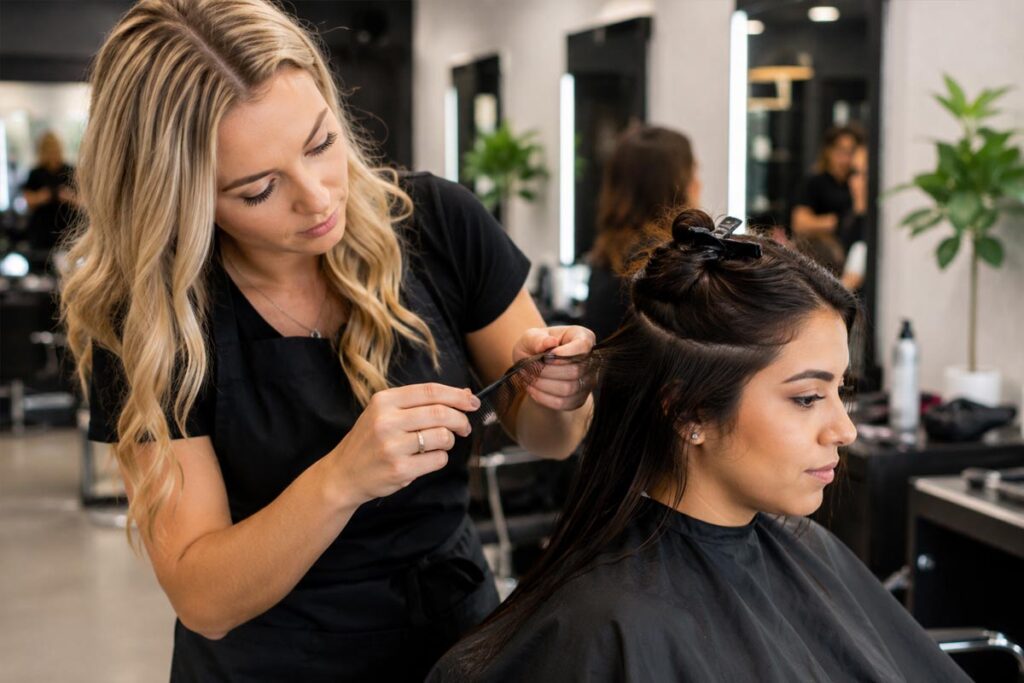
Students practice repeatedly on mannequins before working with guests under instructor supervision.
They receive feedback on:
Repetition builds muscle memory.
Confidence grows alongside technical ability.
By graduation, students have practiced numerous classic and modern haircut variations that prepare them for real salon environments.
If you are wondering what beauty school involves beyond haircutting alone, you may also enjoy reading How Long Does It Take to Complete Cosmetology School?, which explains the educational journey from enrollment through graduation.
Studying famous haircuts is not about nostalgia.
It is about understanding why certain techniques continue to succeed.
Classic styles have survived because they solve real design challenges.
They flatter different face shapes.
They create movement.
They improve balance.
They adapt well as trends evolve.
For cosmetology students, learning these foundational haircuts builds technical confidence while encouraging creative thinking.
Today’s most requested styles often begin with yesterday’s innovations.
The professionals who understand both history and technique are better prepared to create personalized looks that keep clients coming back.
As the beauty industry continues to evolve, the strongest stylists are those who appreciate where great haircutting began and know how to apply those lessons to the next generation of trends.
Classic haircuts teach the core techniques used in professional salons today. Students learn precision cutting, layering, graduation, texture control, and consultation skills that apply to modern hairstyles.
There is no single most important haircut. Styles such as the bob, pixie, shag, and geometric precision cuts each teach different technical skills that help students become well-rounded professionals.
Yes. Many trending styles are updated versions of classic haircuts. Understanding the original techniques helps stylists recreate modern looks more accurately.
Yes. Beauty schools typically teach foundational haircutting principles first and then show students how those techniques apply to today’s trends and client requests.
Hair history helps students understand why certain cutting techniques work, improves consultation skills, and teaches them how to customize styles for different hair types, face shapes, and lifestyles.
Students also develop skills in hair coloring, chemical texture services, styling, sanitation, client communication, product knowledge, and professional business practices, preparing them for a variety of careers in the beauty industry.