

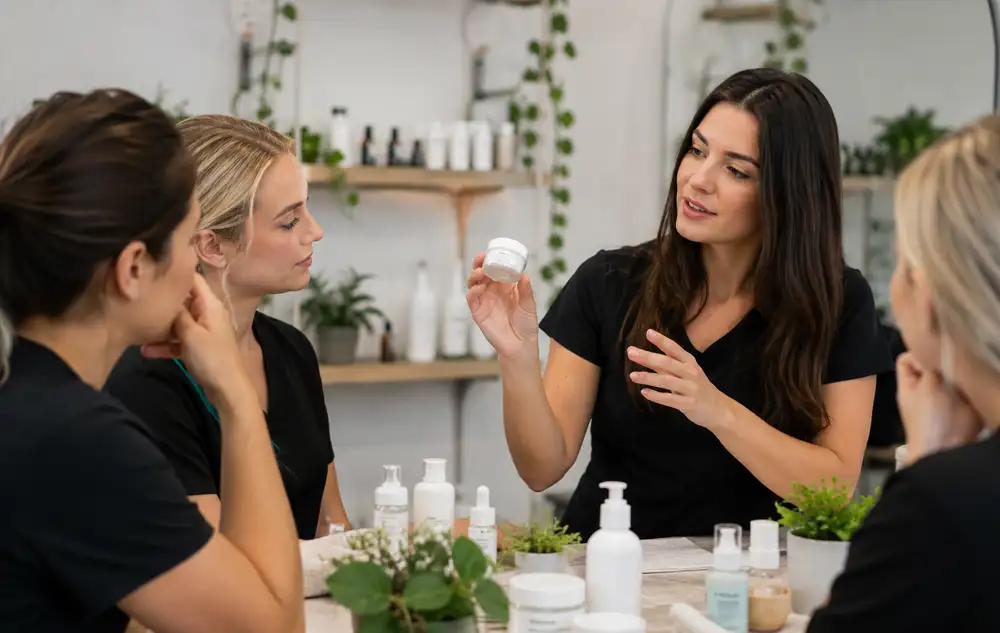
Article summary: Clean beauty refers to products and formulations made with greater transparency around ingredients, generally avoiding certain synthetic chemicals while prioritizing safety and disclosure. The term does not have one universal legal definition, but it has become a major force in how beauty brands formulate products and how salons choose what to use on clients. Cosmetology programs are responding by teaching ingredient literacy alongside technical skill, so graduates can speak knowledgeably with clients who increasingly ask about what is in the products being used on them.
Walk into almost any beauty retailer today and the phrase clean beauty appears on shelf tags, product packaging, and marketing campaigns. It shows up in client conversations too. More people are asking their stylist or esthetician what is actually in the products being applied to their hair and skin, and a confident, accurate answer has become part of what makes a beauty professional trustworthy in 2026. That shift is exactly why clean beauty has worked its way into cosmetology school curriculum, not as a passing trend, but as part of building well rounded, client ready professionals.
Clean beauty does not have a single regulated definition the way organic food does in agriculture. Instead, it functions more as a category description used across the beauty industry to describe products formulated with ingredient transparency and a deliberate effort to avoid certain substances commonly flagged as concerning, such as parabens, sulfates, phthalates, and some synthetic fragrances. Brands marketing themselves as clean typically publish full ingredient lists and explain their formulation choices openly, rather than relying on vague claims.
It helps to separate a few related terms that often get used interchangeably, even though they mean slightly different things. Natural refers to ingredients derived from plants, minerals, or other naturally occurring sources, though a natural ingredient is not automatically safer or more effective than a synthetic one. Organic typically refers to ingredients grown without certain pesticides or synthetic fertilizers, and in some cases follows formal certification standards. Non toxic is a more general claim suggesting a product avoids ingredients linked to health concerns, though the strength of that claim depends heavily on which ingredients are being referenced and what evidence supports the concern. Clean beauty tends to borrow from all three ideas while centering specifically on transparency and ingredient disclosure.
A few forces converged to push clean beauty from a niche interest into a mainstream expectation. Consumer demand for ingredient transparency grew steadily over the past decade, fueled in part by easier access to ingredient databases and product review platforms where people could research formulations themselves rather than relying solely on brand marketing. Retailers responded by creating dedicated clean beauty sections and certification standards, which gave the category more visibility and more credibility at the same time.
Regulatory attention has increased as well. Some ingredients once common in cosmetic formulations have come under closer scrutiny by health agencies and researchers, prompting reformulation across major product lines. None of this means older formulations were unsafe by the standards in place when they were created. It means standards and consumer expectations evolve, and brands that adapt quickly tend to earn more trust from increasingly informed clients.
For working cosmetologists, estheticians, and barbers, clean beauty is not an abstract industry trend. It shows up directly in daily client interactions. A growing number of clients now ask specifically about ingredients before a color service, a facial, or a chemical treatment, particularly those with sensitive skin, allergies, or who are pregnant and want to avoid certain ingredient categories during that time.
Salons and spas have responded by stocking clean formulated product lines alongside traditional professional lines, giving clients a choice rather than forcing a single approach. Estheticians in particular have seen this shift accelerate, since skincare sits closer to health and wellness in most clients’ minds than hairstyling does. Understanding formulation basics, common ingredient concerns, and how to read a product label confidently has become a genuine professional skill, not just trivia.
Cosmetology education has always included product knowledge, since no stylist or esthetician can perform services safely without understanding what they are working with. What has changed is the depth of that conversation. Students training in programs like esthetics and cosmetology at TSPA Delaware learn not only how to use professional product lines correctly, but also how to talk through formulation questions with clients who want that information.
This kind of product education connects directly to the kind of beauty industry terminology students need to be fluent in well before graduation. Being able to explain the difference between a sulfate free shampoo and a traditional one, or describe why a particular facial product avoids certain fragrance compounds, builds the kind of client trust that turns a single appointment into a long term relationship. It is also a meaningful piece of building a personal brand for students who eventually pursue career paths beyond the traditional salon chair, including product education and consulting roles where ingredient knowledge is the entire job.
Anyone considering cosmetology school today is entering an industry where technical skill and product knowledge are equally valued. Clients expect their stylist or esthetician to be a genuine source of information, not just a set of hands performing a service. Programs that build ingredient literacy into the curriculum are preparing students for the actual conditions of the modern beauty industry, where a client’s first question might just as easily be about a formulation as it is about a finished look.
For students weighing which program fits their goals, TSPA Delaware’s cosmetology program and esthetics program both include this kind of product education as part of building well rounded, client ready professionals.
Not exactly. Organic typically refers to ingredients grown under specific agricultural standards, sometimes with formal certification. Clean beauty is a broader category focused on ingredient transparency and avoiding certain flagged substances, and a clean product is not necessarily organic.
No. Every product, including water, is made of chemicals. Clean beauty refers to transparency around formulation and a deliberate choice to avoid certain specific ingredients commonly flagged as concerning, not the absence of chemicals altogether.
Clients increasingly ask about product ingredients before facials and skincare treatments, especially those with sensitive skin or specific health considerations. Being able to answer those questions accurately is part of providing safe, trustworthy client care.
Product knowledge has always been part of cosmetology and esthetics training. Many programs, including those at TSPA Delaware, now include more detailed ingredient education to reflect what clients are asking for in real appointments.