

Article summary: A master cosmetologist is a beauty professional who has gone beyond foundational cosmetology training to develop advanced technical skill, deepen their specialty knowledge, and build a professional reputation that sets them apart in the industry. The term is not always a formal credential with a fixed definition. In many cases, it describes a combination of experience, advanced education, and demonstrated expertise that elevates a cosmetologist above entry-level practice. This article explains what the master cosmetologist credential means in practice, how it differs from a standard cosmetology background, and what paths exist for beauty professionals who want to reach that level.
The phrase “master cosmetologist” carries real weight in the beauty industry. It signals something beyond completing a training program and passing an exam. It points to a professional who has invested in their craft over time, built deep expertise in specific areas, and earned recognition from peers and clients alike.
However, the term is used in different ways across different contexts. Understanding what it actually means, and what it takes to earn that standing, helps both aspiring professionals and their future clients know what they are looking at.
First, it helps to separate the two contexts where this term appears.
In some states, “master cosmetologist” is an official credential title used by the state board to designate a fully credentialed beauty professional. In those cases, it simply means a person who has completed their required training hours and passed the relevant exam. It is a credential name, not necessarily an indication of exceptional experience.
In the broader beauty industry, however, “master cosmetologist” describes something earned over time. It refers to a professional who has developed a high level of technical mastery, typically through years of hands-on work, ongoing education, advanced specialty training, and a track record of exceptional results. This is the definition that matters most when clients seek out a master cosmetologist or when professionals aspire to reach that standing.
The rest of this article focuses on that second, more meaningful definition.
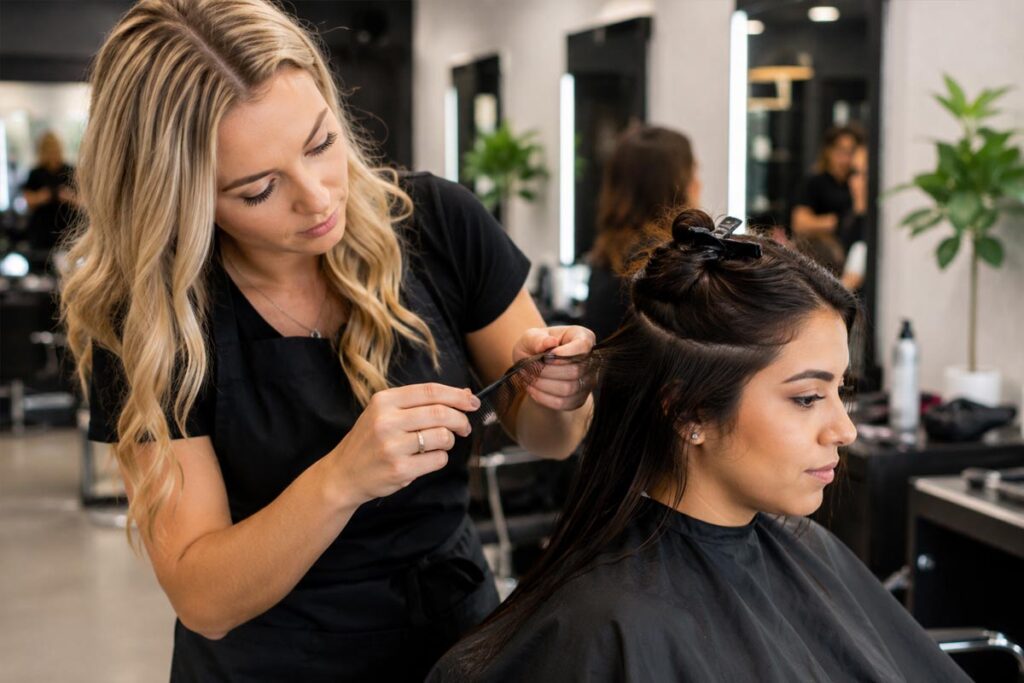
A standard cosmetology program teaches a broad foundation. Students learn hair cutting, coloring, chemical services, skin care basics, nail care, sanitation, and the science behind the products and tools they use. That foundation is rigorous and comprehensive. But it is a starting point, not a finish line.
A master cosmetologist builds on that foundation in deliberate ways. The differences typically show up across several areas.
Technical depth. A master cosmetologist has refined their techniques through repetition and deliberate practice. Their precision with a haircut, their eye for color, and their ability to assess a client’s hair or skin type and select the right approach comes from doing the work consistently at a high level over an extended period. That depth of skill is not something a training program alone can produce. It develops through experience.
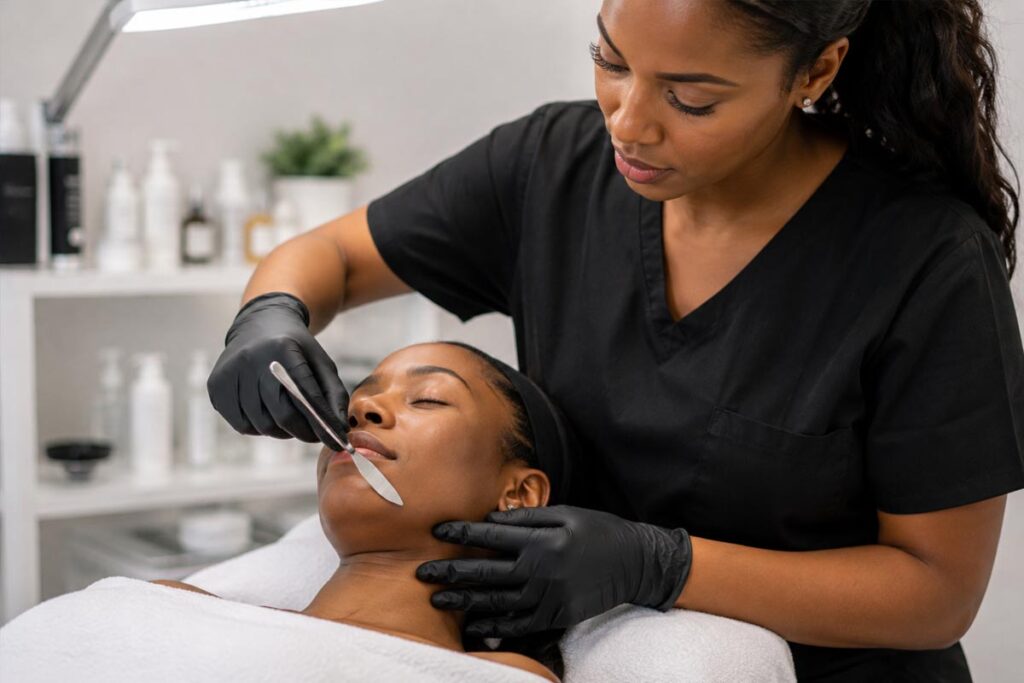
Specialty expertise. Most master cosmetologists develop one or more specialties where they become genuinely exceptional. That might be color correction, precision cutting, advanced chemical services, bridal styling, or a specific skin care modality. Specialty expertise is often built through targeted continuing education courses, workshops, and mentorship with other advanced professionals in the field.
Client results and reputation. A master cosmetologist’s work speaks for itself. Their clients see consistent, exceptional results. They rebook reliably. They refer others. That kind of reputation builds over time and cannot be faked or fast-tracked.
Industry knowledge. Master cosmetologists stay current. They understand trends before they peak, know the science behind new product formulations, and can speak knowledgeably with clients about why a particular approach is or is not right for them. That knowledge comes from continuous learning, not just initial training.
Advanced education is one of the clearest and most direct paths toward master-level standing in the beauty industry. It signals intentionality. It builds skills that standard training does not cover. And it gives professionals credentials that distinguish them in a competitive market.
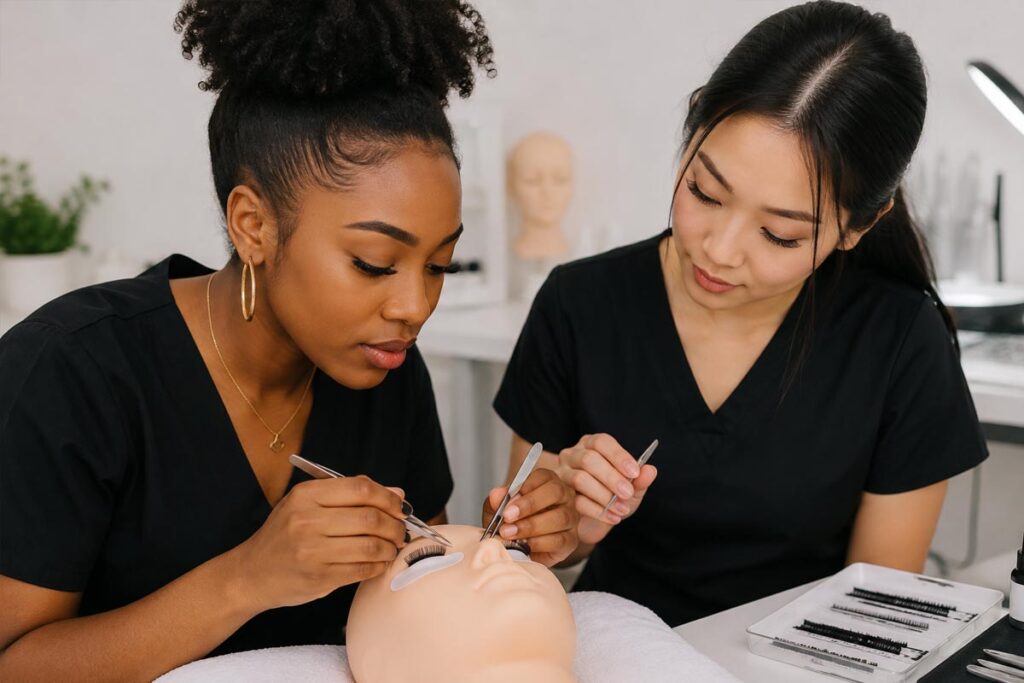
Advanced education for cosmetologists can take many forms. Specialty certification courses add new services to a professional’s menu and deepen their expertise in a specific area. Continuing education workshops taught by recognized industry educators bring new techniques and product knowledge. Mentorship arrangements with senior professionals accelerate skill development in ways that independent practice alone cannot.
TSPA Delaware’s Advanced Education Program is designed specifically for working beauty professionals who want to build on their existing foundation. The program offers hands-on specialty training in high-demand services, including lash and brow treatments, that allow professionals to expand their skill set and their earning potential. Advanced certifications through recognized industry partners like Bella Lash give professionals credentials that clients and employers recognize.
For those who want to take their expertise in a different direction entirely, the Instructor Training Program at TSPA Delaware represents another advanced path. Teaching requires mastery of the foundational material at a deeper level than personal practice alone demands. Many professionals who pursue instructor training find that the process of learning how to teach accelerates their own technical development significantly.
There is no fixed timeline because there is no single standardized credential path. Most professionals who reach genuine master-level standing have been working actively in the industry for at least five to ten years, though the rate of development varies significantly based on environment, mentorship access, and how intentionally a professional pursues advanced education.
A professional working in a high-volume environment with access to diverse client types and strong mentorship may develop advanced skills faster than someone working in a quieter setting without much professional development support. What matters more than time is intentionality. Professionals who actively seek out advanced training, pursue specialty certifications, and continually raise their own standards develop faster than those who rely solely on on-the-job repetition.
Starting that journey begins with the right foundational program. The cosmetology program at TSPA Delaware is built to give students the strongest possible starting point, with hands-on client experience built in from early in the program and instruction from educators who have worked at advanced levels in the industry themselves.
Clients are increasingly educated about beauty services. They research professionals before booking, read reviews, look at portfolios, and ask detailed questions. That shift in client behavior has created a meaningful market advantage for professionals who can demonstrate advanced expertise over those who simply hold a basic credential.
At the same time, the beauty industry continues to expand. Demand for skilled professionals who can deliver consistent, high-quality results is growing across salons, spas, editorial work, film and media production, and independent suite-based businesses. Master-level professionals fill the top tier of that demand and command pricing to match.
The broader picture of where advanced cosmetology skills can take a career is covered on the career paths beyond the salon chair page, which outlines the full range of environments where highly skilled beauty professionals build meaningful careers.
A master cosmetologist is a beauty professional who has developed advanced technical expertise, often through years of experience combined with specialty training and continuing education. In some state contexts, it is also a formal credential title used to designate a fully credentialed beauty professional. In the broader industry, it describes a level of mastery that goes well beyond foundational training.
A standard cosmetologist has completed foundational training in hair, skin, and nail services. A master cosmetologist has built on that foundation through advanced education, specialty training, extended hands-on experience, and a demonstrated track record of exceptional results. The difference is one of depth, specialization, and professional standing, not just credentials on paper.
Yes. Reaching master-level standing requires going beyond foundational cosmetology training. Advanced specialty certification courses, continuing education, and mentorship with senior professionals are the most common paths toward developing the skills and reputation that define a master cosmetologist.
Advanced training varies by specialty and career focus. Common examples include specialty certification courses in areas like lash services, color correction, or advanced chemical treatments, as well as workshops taught by recognized industry educators and instructor training programs for those who want to teach the craft professionally
Absolutely. Every master cosmetologist started with foundational training. The path to master-level standing is built over time through intentional skill development, advanced education, and a genuine commitment to continuous improvement. The foundation built in cosmetology school is where that journey begins.