
If you ask someone what they spend on beauty each month, you’ll usually get a vague answer. But when you look at real pricing across salons, spas, and medspas in Wilmington, a much clearer picture emerges.
In this analysis, we looked at typical service pricing, local salon menus, medspa offerings, and real consumer spending discussions to estimate what people in Wilmington, Delaware actually spend on hair, nails, and skincare in 2026.
The goal is not to give a single “exact number,” because every client is different. Instead, it’s to show what normal spending looks like across different lifestyle levels, and what drives those costs up or down.
In Wilmington and surrounding areas like Newark and coastal Delaware, beauty services have shifted from occasional luxury appointments to ongoing maintenance routines for many clients.
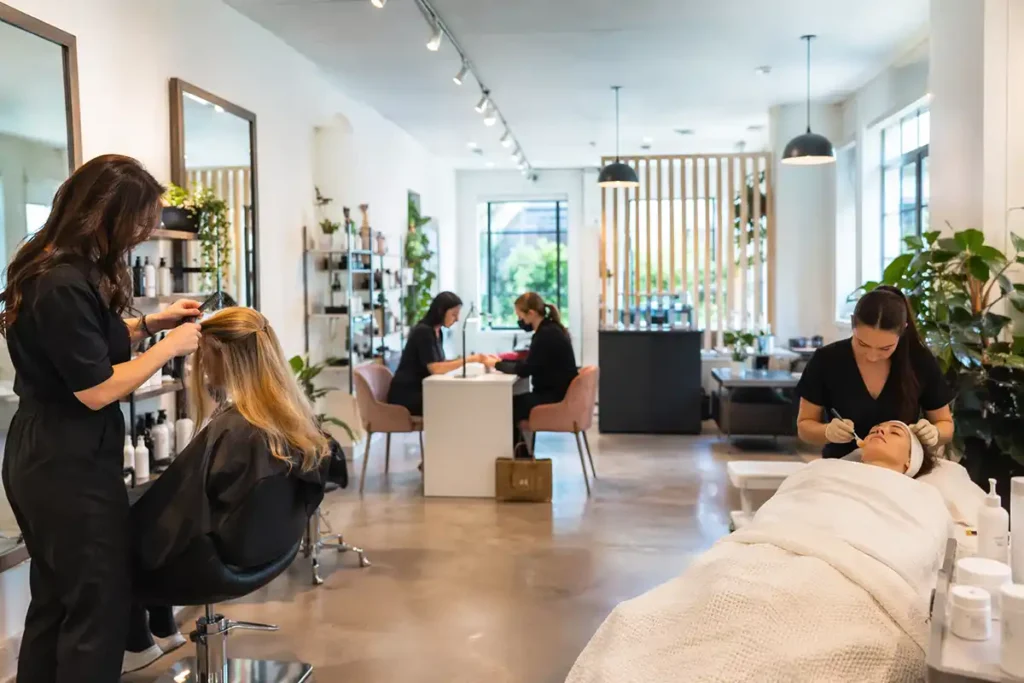
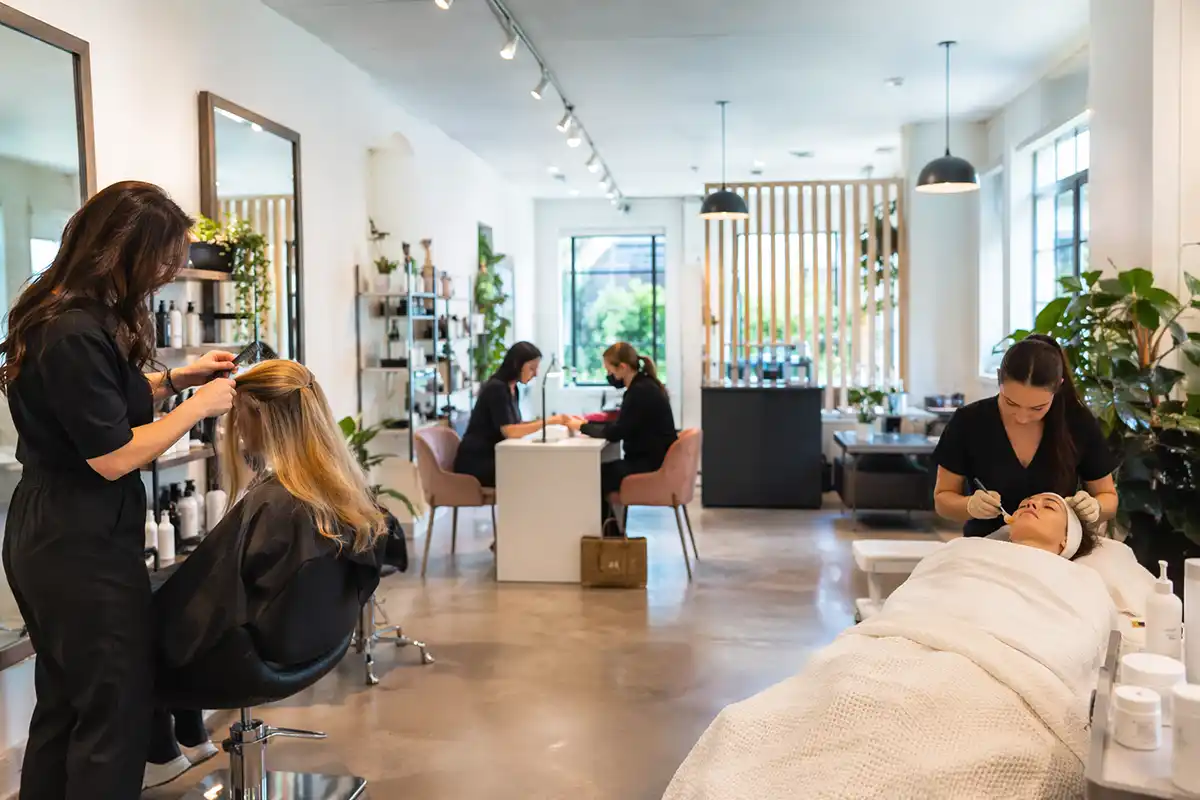
Salons offering full-service experiences now commonly provide hair, nails, lashes, and skincare under one roof. For example, large local providers like Currie Hair Skin & Nails and similar multi-service studios show how bundled beauty care has become the norm rather than the exception.
Because of this shift, client spending is less about one-time visits and more about monthly or biweekly upkeep.
Hair remains the highest-cost category for most people in Wilmington.
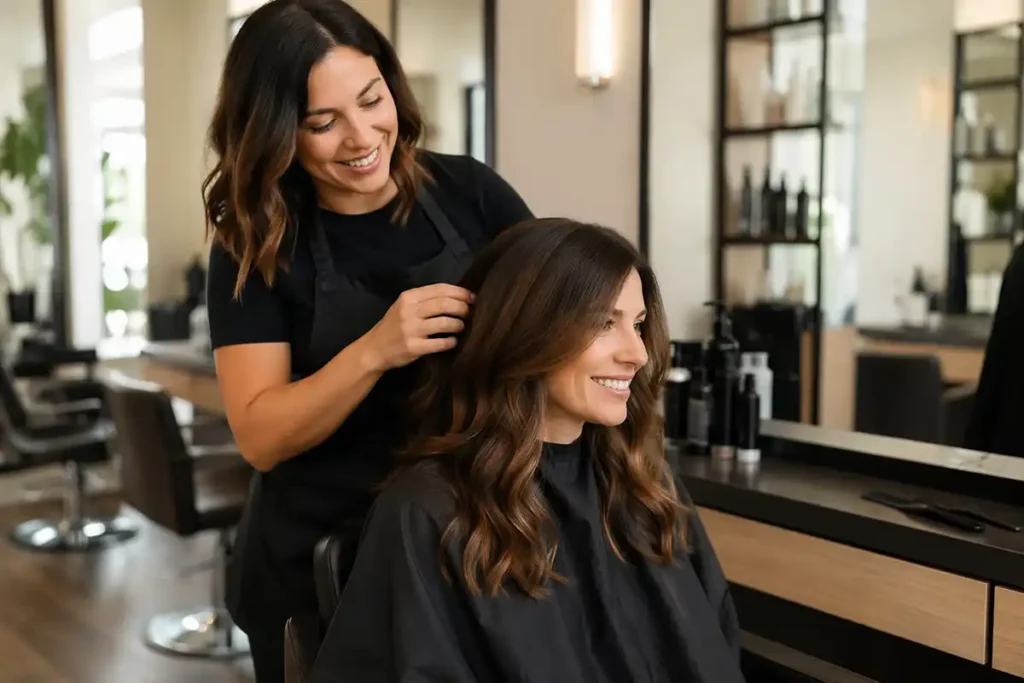
A standard haircut typically falls into a moderate range, but once color services are involved, spending increases quickly. Blonde maintenance, balayage, and corrective color tend to push clients into higher monthly budgets.
Across local salons, a realistic breakdown looks like this:
A basic haircut or trim is usually a lower recurring expense, often scheduled every 6 to 10 weeks. Color services, however, can turn into monthly or seasonal investments depending on the look.
Clients who maintain highlights or balayage often spend significantly more over the course of a year than those who stick to natural cuts. This is where lifestyle choices begin to separate spending levels.
For many Wilmington clients, hair is not a one-time service. It is the anchor expense that determines how often they return to a salon at all.
Unlike hair, nail services are highly routine-based. Many clients return every two to four weeks, which makes nails one of the most predictable beauty costs.
Based on local pricing trends and service menus across Delaware salons, a typical manicure and pedicure cycle can range from basic polish services to gel and acrylic maintenance.
Gel manicures and pedicures are especially popular because they last longer, but they also increase monthly spending.
This is where beauty budgets become consistent rather than occasional. Even clients who are otherwise low-maintenance often keep nails as a fixed monthly expense because it is one of the easiest ways to maintain a polished appearance.
Across Wilmington, nail care often becomes the most reliable “subscription-style” beauty service.
Skincare spending in Wilmington has grown significantly in recent years, especially with the rise of advanced treatments.
Traditional facials still exist, but more clients are now choosing services like chemical peels, microdermabrasion, and HydraFacial-style treatments offered in salons and medspas.
Local providers such as Beauty Bar by Kristina Ruggerio and similar medspa-style salons show how skincare has evolved into a more technical and results-driven service category.
Unlike hair and nails, skincare spending is less predictable. Some clients go monthly for maintenance facials, while others invest in occasional high-end treatments several times per year.
What stands out most is that skincare is no longer viewed as purely cosmetic. Many clients now treat it as preventative care, which increases willingness to spend more per visit.
When you combine hair, nails, and skincare together, three general spending patterns emerge in Wilmington.
Some clients are minimal maintenance, focusing mostly on haircuts and occasional nails. Others maintain a consistent monthly routine that includes nails and regular hair services. A smaller group invests heavily across all three categories, including advanced skincare treatments and premium salon services.
The key takeaway is that spending is less about income alone and more about lifestyle habits. Once someone commits to regular nail appointments or color maintenance, their beauty spending becomes predictable and ongoing.
Even small service choices, like switching from basic polish to gel nails or from trims to color treatments, significantly increase annual spending.
One reason this topic is trending in search and conversation is that clients feel like beauty costs have increased faster than expected.
Across the industry, prices have risen due to labor costs, product pricing, and demand for more advanced services. At the same time, clients are booking more complex services rather than simple maintenance appointments.
For example, what used to be a basic facial is now often replaced with multi-step skincare treatments. What used to be a simple manicure is now gel or acrylic maintenance cycles.
This shift makes beauty feel more expensive, even when clients are simply choosing upgraded services.
For students entering cosmetology or esthetics programs, this spending data is important. It shows where real revenue in the industry comes from.
Hair remains the anchor service, nails provide consistency, and skincare is the fastest-growing opportunity area. Professionals who understand all three categories tend to build more stable client bases over time.
It also highlights why client experience matters so much. In a market where people are spending consistently, retention becomes more valuable than one-time transactions.
So what do people in Wilmington actually spend on hair, nails, and skincare in 2026?
The answer is that spending varies widely, but the structure is consistent. Hair is the largest investment, nails are the most frequent expense, and skincare is the fastest-growing category.
What has changed most is not just pricing, but behavior. Beauty services are no longer occasional treats for many clients. They are part of ongoing routines that reflect lifestyle, identity, and self-care priorities.
Understanding that shift is essential for anyone entering the beauty industry, because it defines where client demand is heading next.